Ancient Meat Diet: How Humans 1.6 Million Years Ago Hunted for Bone Marrow

Paleoanthropologists working at the Koobi Fora formation in Kenya have discovered that ancient humans 1.6 million years ago followed a sustainable meat consumption strategy. They did not eat everything they found; instead, they systematically selected carcasses, processed them, and opened bones to extract bone marrow, demonstrating specific taste preferences.
Bone marrow is a high-calorie product rich in fats and proteins, difficult for most predators to access without tools. Extracting it requires a precisely directed strike to the bone at the right angle. Evidence of such processing is among the oldest signs of tool use and conscious planning.
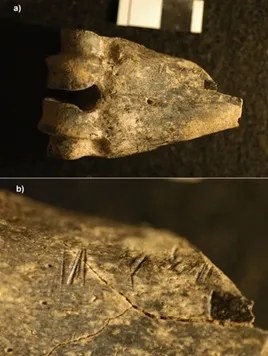
In northern Kenya at the Koobi Fora formation, paleontologists found over 1,100 animal bones dated to about 1.6 million years ago, bearing the same signs of processing — identical cuts in the same locations and similarly opened long bones. This is not a coincidence.
A study published in the Proceedings of the National Academy of Sciences shows that early members of the genus Homo adhered to a consistent and thoughtful meat procurement strategy for hundreds of thousands of years.

Most of the remains belong to antelopes and other ungulates. The cuts are concentrated where the large muscles are located, meaning where the most meat is. Bones were opened with a targeted strike to extract bone marrow. There are almost no signs of predator teeth, indicating that early humans captured carcasses before they could be scavenged by birds or taken by other animals. Whether they hunted themselves or successfully drove off competitors is still unknown, but they arrived first.
Read this article in full and everything else in Telegram, ad-free
Open in TelegramThanks, I just want to finish reading here
Strategy, Not Instinct
Equally important is what ancient humans chose to take. They did not drag entire carcasses; instead, they selected specific parts: meaty limbs. This choice suggests an assessment of effort, distance, and benefit. The campsite was located by a riverbank, where animals came to drink, allowing humans to replicate the same tactic repeatedly.
If there was enough prey, a surplus would arise. Researchers believe this surplus could have laid the foundation for food sharing and cooperation within groups. Predictable access to resources can change behavior: instead of relying on chance, there comes a reliance on consistent practice. This is no longer just a diet; it is a first step towards sociality.