Chilling Catacomb Saints: Unique Exhibition in Germany
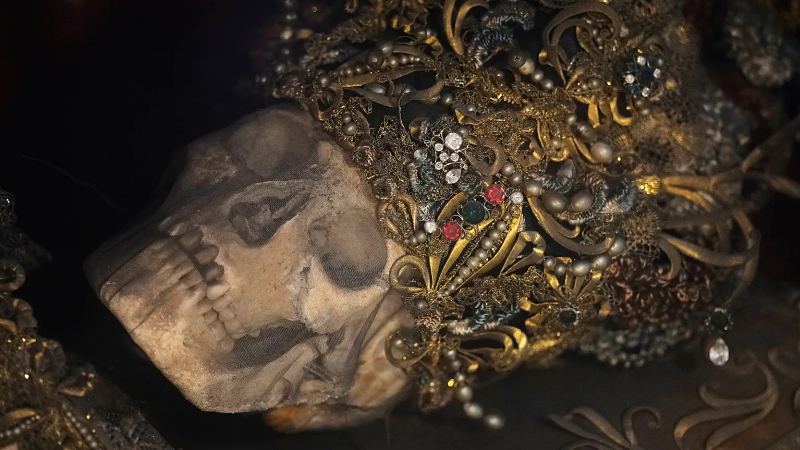
In the Catholic monastery of Banz in southern Germany, four skeletons adorned with gold and silver ornaments, lace, and precious stones are on display. These remains, known as Vincenzius, Valerius, Benedictus, and Felix Benedictus, were brought from Rome in the late 17th and 18th centuries and represent the catacomb saints.
The relics serve as a reminder of hope during difficult times when three-quarters of Germany's population perished during the Thirty Years' War. Priest Walter Ries notes that during that time, people sought beauty and comfort, decorating the skeletons to appear as lifelike as possible.
Church custodian Anita Gottschlich emphasizes that the sight is eerie yet unforgettable. Elderly visitors often seek the Holy Bodies, which continue to captivate people of all ages.
Read this article in full and everything else in Telegram, ad-free
Open in TelegramThanks, I just want to finish reading here
Catacomb saints, or "Holy Bodies," can be seen in many baroque Catholic churches and monasteries throughout Bavaria, as well as in neighboring countries like Austria, Switzerland, the Czech Republic, and Italy. These remains, found in Roman catacombs, belong to martyrs from the early Christian era, and the church declared them saints, enhancing the prestige of local churches and making them pilgrimage sites.
To make encounters with the Holy Bodies truly special, they are covered with wooden panels for most of the year, and on special days, such as All Saints' Day, the panels are removed, and the relics are shown to the faithful.