Drought in Hungary: Record Low Water Levels in Rivers and Lakes Threaten Ecosystem
The drought situation in Hungary is worsening. In some areas, the soil lacks up to 120 millimeters of moisture, particularly in the Great Plain.
Agricultural meteorological analysis from HungaroMet warns of poor weather conditions in April, with almost no precipitation.
Over the past 30 days, rainfall has been 20-70 millimeters below average. Soil across the country is critically dry, especially in the top layer.
Last year, 550,000 hectares were affected by drought, with insurers paying nearly 40 billion forints. This year, the situation may be even worse, as 90% of the country's land is at risk. In some areas, there has been no rain for a month, which is critical for crop production.
Necessary Measures
To mitigate damage and develop a water resource management plan, Peter Madjar has called on the new Minister of Environment to take responsibility. Laszlo Gajdos recommended not mowing grass in May to reduce water consumption.
The Deputy Press Secretary of the National Water Management Authority reported that nearly one year out of the last five has seen no precipitation. To better distribute available water resources, infrastructure needs to be improved, with public participation being crucial.
Read this article in full and everything else in Telegram, ad-free
Open in TelegramThanks, I just want to finish reading here
Efforts are underway with NGOs to retain water in the Sebes-Körös and Berető river areas, where water delivery and resource management are being implemented.
Critical Situation with Water Bodies
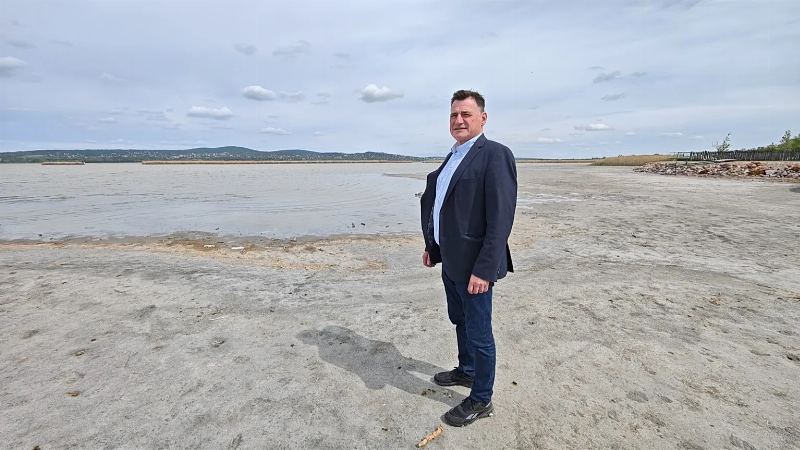
The crisis is not only observed in the Great Plain. Water levels in Hungary's rivers and lakes are critically low, especially at Lake Velence, where shorelines have receded by 15-20 meters.
If water were available, the lake would be supplied by two reservoirs, but they have dried up. The only natural water source for the lake is a stream called Imperial Water.
The mayor of Gardony noted that the water shortage has long been a problem. Diverting water from the Danube would be a temporary solution; in reality, a new pipeline system would be needed for a long-term fix.
The water level at Lake Velence has dropped from 81 centimeters to 66 centimeters, significantly below the optimal level. Local authorities hope for support from the new representative, who will prioritize the protection of the lake.