EU Sanctions: Russia Begins to Feel Economic Impact
Following the events of February 2022, the European Union initiated an unprecedented project aimed at undermining Russia's ability to wage war in Ukraine, hoping that sustained pressure would eventually lead the aggressor to acknowledge defeat.
Despite 20 rounds of economic sanctions, the ultimate goal remains elusive. Moscow continues its bombardments and refuses to make any concessions at the negotiating table.
However, signs of economic strain in Russia are beginning to undermine the image of invincibility projected by the Kremlin.
According to the Ministry of Economic Development, from January to March, the Russian economy contracted by 0.3%, marking the first decline since the beginning of 2023. During the same period, the budget deficit grew to $60 billion, exceeding the annual target. Inflation remains at nearly 6%, with an exorbitant interest rate of 14.5%. The Central Bank of Russia has raised alarms about labor shortages.
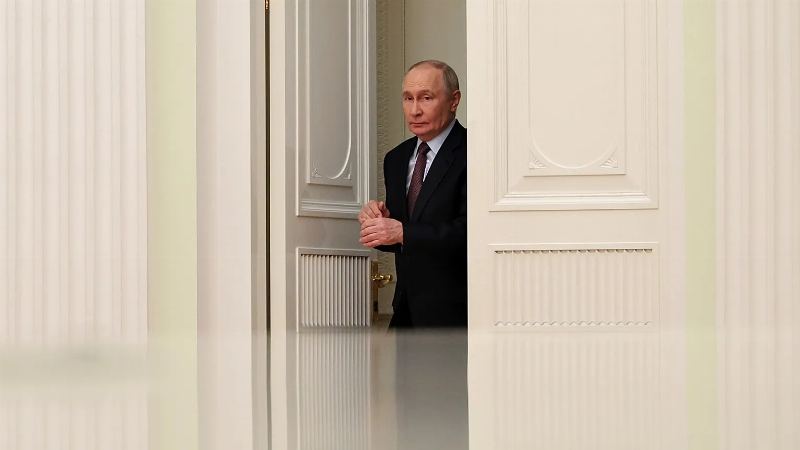
Even President Putin acknowledged that things are not going as planned, requesting his team to explain why macroeconomic indicators are not meeting expectations and to propose additional measures to restore growth.
European leaders have taken note.
"Yes, sanctions are having a serious impact on the Russian economy," said Ursula von der Leyen, President of the European Commission, in a recent speech.
French Foreign Minister Jean-Noël Barrot stated that "the Russian economy is plunging into crisis," urging the Kremlin to "open its eyes to its failure," while Swedish Finance Minister Elisabeth Svantesson concluded that "we are right" and that "sanctions are working."
Now, the EU is trying to persuade other G7 allies, particularly the United States, to implement a coordinated ban on maritime transport for Russian oil tankers to increase shipping costs and undermine crucial profits.
This measure is currently on hold due to supply disruptions caused by the closure of the Strait of Hormuz, which brought Moscow $19 billion in oil sales revenue in March, significantly more than the $9.7 billion in February.
Brussels aims to reverse this trend and return to a sustainable decline in global Urals oil prices, which had been observed in the months leading up to the closure of the Strait of Hormuz. Officials hope that a complete ban, combined with actions against the activities of the "shadow fleet" and Ukraine's long-range strikes on Russian oil export facilities, will yield quick results.
"Right now, we see two things working together: you see that Russia needs to spend a lot of money to sustain military operations, and you see that sanctions are biting, having an impact. The pain is being felt more acutely," said a senior EU diplomat.
"Do you see the Russian side's willingness for serious negotiations? I do not see it. Therefore, we need to increase pressure," noted the diplomat.
Growing Problems
Claiming victory for sanctions is a slippery slope, as there are nearly as many arguments for this assertion as there are against it.
The pressure campaign launched by the EU and Western allies has turned Russia into the most sanctioned country in the world. As a result, Russia has become a pariah on financial markets: about $300 billion in reserves are securely immobilized, and dozens of banks have been excluded from major payment systems.
Consequently, Moscow is forced to rely on the Chinese yuan to bolster its reserves and on cryptocurrency platforms to circumvent restrictions. Liquid assets of the National Wealth Fund are largely depleted to cover previous deficits.
Countless export-import bans have deprived Russia of complex goods and know-how that local producers cannot fully replace, reducing the country's capacity for innovation. Conversely, Russian firms can no longer rely on wealthy European clients and instead trade with lower-income markets.
According to a senior advisor at the Bank of Finland, the refined effect of sanctions has changed Russia "in many ways," although it is "not very possible" to separate the strain from sanctions and the strain from military policy.
Read this article in full and everything else in Telegram, ad-free
Open in TelegramThanks, I just want to finish reading here
"Access to global financial markets is virtually closed, meaning that all financing, both for the government and the private sector, must be sourced from internal sources. The currencies used in foreign trade have changed, and the banking sector has de-dollarized both assets and liabilities, limiting access to many high-tech goods and materials," said the advisor in an interview with Euronews.
"All of this adds extra costs for businesses," the expert noted.
The picture may be even bleaker: Western intelligence suspects that Moscow is manipulating official data to conceal the extent of economic difficulties. The head of the Central Bank of Russia, Elvira Nabiullina, has publicly called for honesty in reporting.
Costly War
The Russian economy today is less dynamic, less attractive, and less wealthy than it was before the full-scale invasion of Ukraine.
But this does not mean it is on the brink of collapse.
Russia has managed to avoid the three worst-case scenarios that European officials feared would result from sanctions: a protracted recession, catastrophic sovereign debt default, and a popular uprising triggered by declining living standards.
The reason for this "survivability" lies in the high-intensity and costly military economy that the Kremlin is enforcing with an iron fist.
In 2021, a year before the invasion, Russia's military spending was $65 billion, or 3.6% of GDP. Last year, those expenditures reached $190 billion, already 7.5% of GDP.
Massive state injections have transformed entire industries, supply chains, and jobs, spilling over into other sectors of the economy. While troops are mired in a war of attrition in Ukraine, Russian factories are forced to produce weapons and ammunition around the clock, creating relentless demand for resources, energy, and labor, leading to an unending cycle of production and consumption.
The Kremlin entered the war with a low debt-to-GDP ratio, a well-known policy that Putin began after his unexpected rise to power in 1999. This means that the federal budget has enough room to cope with the swelling deficit and sustain massive military expenditures in the short term. The fact that Putin views the war in existential terms helps justify controversial cuts to social programs and widespread censorship.
According to the International Monetary Fund (IMF), Russia's economic growth in 2026 is projected to be 1.1%, which is in line with the 1% forecast for 2025. This figure is modest but actually higher than the forecasts for the three largest EU economies - Germany (0.8%), France (0.9%), and Italy (0.5%) - further evidence of resilience.
Despite the fact that Russia's military economy is artificial and extremely costly, it has proven to be a powerful driver of economic activity and an effective shield to partially offset the "barriers" created by EU sanctions. These sanctions were introduced gradually, giving the Kremlin time to adapt and develop ways to circumvent restrictions.
"Economies under sanctions tend to live long. They just don't feel very good, but they are not prone to collapse," says Timothy Ash, a senior research fellow at Chatham House.
"Putin knew there would be a war, so the Russians created many buffers and reduced their dependence. When the war began, they were in a very strong position," notes the expert.
Nevertheless, signs of strain are now evident, Ash notes. While the closure of the Strait of Hormuz provided a temporary reprieve, there is a "real danger" for the Russian economy once the waterway reopens and oil prices drop. The buffers created at the beginning of the war have diminished over four years, increasing risk.
"You have a two-speed economy: everything related to the defense industry is doing well, while other sectors are not faring as well. Overall, looking at the indicators, Russia is close to recession, despite rising energy prices," he says.
"If I were in the Kremlin, I would be more worried now than six months ago," Ash concluded.