Chinese Engineers Develop Mobile Nuclear Reactor for Trucks
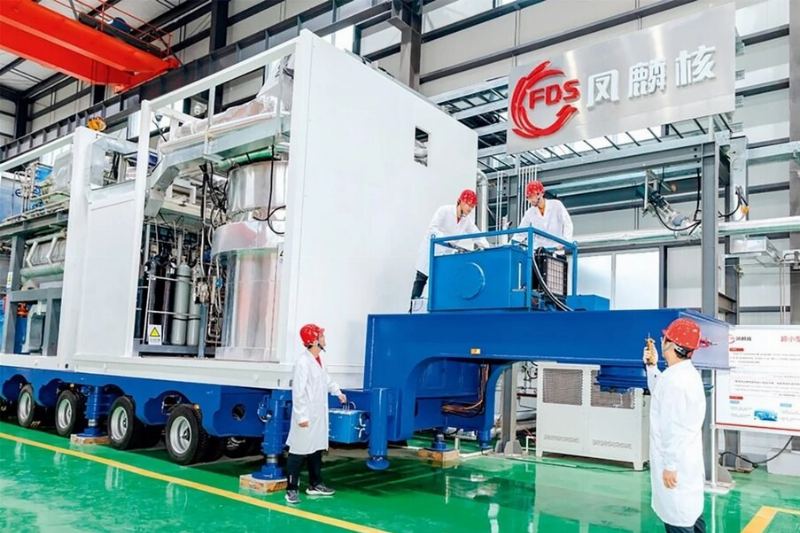
A research group from the Institute of Nuclear Energy Safety in Hefei has developed a prototype of a 10-megawatt nuclear reactor that can be transported by truck. The installation is capable of operating for several decades without refueling and could serve as a universal energy source for remote islands and data centers for artificial intelligence.
China ranks second in the world for nuclear electricity generation, following the USA. Last year, the country operated 59 commercial nuclear power units, producing 467.7 billion kilowatt-hours, which accounts for about 4.82% of total electricity consumption. The creation of mobile microreactors could expand nuclear generation in areas where traditional power grids are unavailable.
The world's first engineering prototype of a mobile nuclear power installation with a capacity of 10 megawatts is mounted on a truck and is positioned as a "nuclear power bank," capable of supplying electricity to an entire data center. The installation operates without recharging for several decades, distinguishing it from traditional power sources.
Read this article in full and everything else in Telegram, ad-free
Open in TelegramThanks, I just want to finish reading here
Key features of the system include safety, compactness, and a long lifespan. Potential applications include power supply for remote areas, emergency backup power, and use in marine vessels. The compact reactor is also considered for space systems and providing computational power for artificial intelligence.
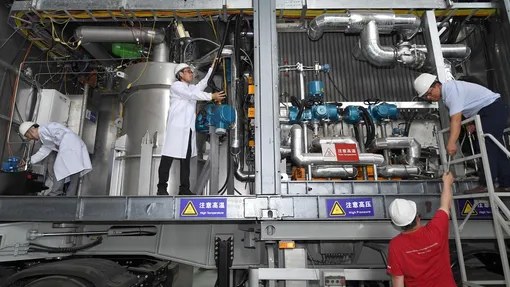
Nuclear Science and Artificial Intelligence
U Yican emphasized the connection between nuclear energy and AI: nuclear reactors provide a stable energy source for high-load computing, while AI is already being integrated into research processes in the nuclear industry.
The energy systems of the future should be accessible and flexible. The range of applications for nuclear technologies spans from microwatt nuclear batteries for pacemakers to megawatt installations for ocean and space exploration. The project is currently in the testing phase, with the team assessing the operational characteristics and safety of the prototype.