AI Detects Pancreatic Cancer Years Before Diagnosis
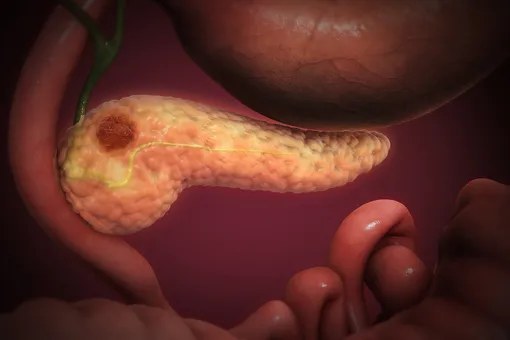
A new artificial intelligence system has been developed that can identify early signs of pancreatic cancer several years before an official diagnosis. The algorithm analyzes standard CT scans and detects changes that the human eye cannot perceive.
Pancreatic cancer is considered one of the deadliest forms of cancer. The main issue is that the disease often develops without symptoms, and tumors are frequently discovered too late, when treatment options are severely limited.
Currently, the five-year survival rate for patients remains low due to late diagnosis. Even modern imaging techniques typically identify tumors only after they have become well-formed.
How AI Sees What Doctors Miss
In a study published in the journal Gut, researchers described a new AI system called REDMOD. It transforms a CT scan into a mathematical model of the pancreas and analyzes the organ pixel by pixel.
First, the algorithm creates a three-dimensional model of the gland from standard two-dimensional images and then searches for the smallest structural deviations. These changes may be nearly imperceptible to humans, but AI can detect hidden patterns related to the future development of tumors.
For validation, researchers used nearly 2000 archival CT scans that were previously considered completely normal. Some patients later developed pancreatic cancer.
AI was able to predict about 73% of such cases in advance, typically identifying concerning signs around 16 months before the official diagnosis, and sometimes more than two to three years in advance.
Read this article in full and everything else in Telegram, ad-free
Open in TelegramThanks, I just want to finish reading here
Why This Could Change Medicine

Early detection significantly increases the chances of successful treatment. If cancer is found before a large tumor and metastases develop, the disease can sometimes be completely cured surgically.
Researchers emphasize that AI does not replace medical professionals. Radiologists are still better at distinguishing healthy patients from false alarms. Therefore, in the future, a combination of human expertise and machine learning algorithms is likely to be used.
The Next Step – Clinics and Next-Generation Testing
The team is currently conducting additional clinical trials and hopes to implement the technology in hospitals within the next five years. Special attention will be given to individuals in high-risk groups: patients with hereditary predispositions, certain mutations, and recently diagnosed diabetes.
Researchers also believe that the maximum effect will come from combining several diagnostic methods at once. For example, AI analysis of CT scans could be combined with blood or urine tests for cancer biomarkers. This approach could make early disease detection significantly more accurate and give patients the time they often lack.