Potato Futures Surge 700% Amid Fears of War with Iran
Futures contracts for potatoes have skyrocketed by 705% in less than a month. From April 21, the price for one hundred kilograms rose from €2.11 to an astonishing €18.50.
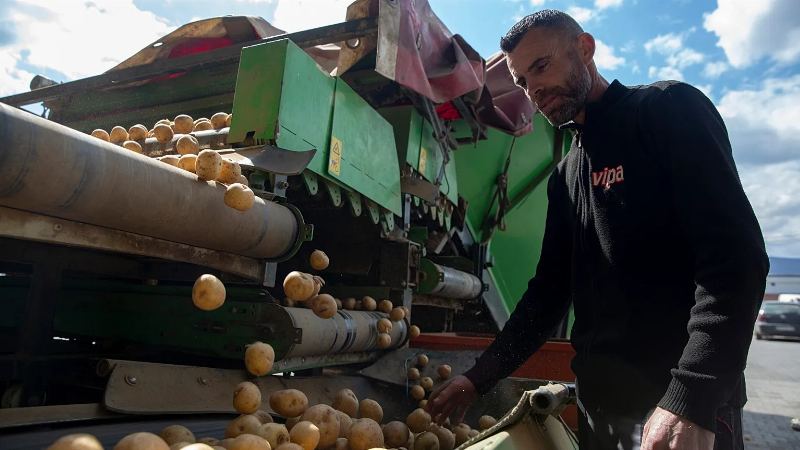
However, this price remains very low compared to the potato market over the past two years due to significant overproduction in the physical market in Europe. Farmers in Belgium, the Netherlands, France, and Germany have notably expanded their planting areas following shortages in previous seasons.
Favorable weather conditions have led to exceptionally high yields, resulting in a substantial surplus in the European market. Consequently, processors and exporters are struggling to manage such volumes, leading to a sharp decline in farm gate prices.
Reports indicate that some lower-quality potatoes intended for feed or technical purposes are being sold at extremely low or even negative prices, forcing producers to pay for transportation or disposal to remove excess from farms.
The mentioned benchmark of €18.50 typically refers to so-called “free” potatoes sold on the open market, rather than volumes already contracted at fixed prices between farmers and processors.
Although this price is higher than the negative values observed in secondary markets, many producers still consider it economically unviable due to rising costs, including fuel, fertilizers, storage, and electricity.
The contrast between weak prices in the physical market and sharp fluctuations in financial indicators reflects the difference between commodity trading and the actual agricultural supply chain.
Financial markets can react strongly to volatility, expectations regarding future harvests, weather risks, export demand, or potential supply corrections, even if current physical stocks remain excessive.
Read this article in full and everything else in Telegram, ad-free
Open in TelegramThanks, I just want to finish reading here
In other words, the significant percentage increase in the value of financial instruments tied to potatoes does not mean that potatoes have suddenly become more expensive in Europe. Rather, it reflects market volatility trying to assess future conditions amid current instability.
Negative Consequences of War Involving Iran
The conflict in the Middle East has severely hampered the export of key chemicals and minerals necessary for industrial agriculture, raising concerns about global food security.
As potatoes are nutrient-intensive crops, a sudden shortage of available fertilizers directly impacts both future harvests and current market assessments.
Additionally, regional instability has made key shipping routes increasingly dangerous, complicating the logistics of agricultural trade.
According to the UN, about one-third of the world's fertilizer supply, including urea, potassium salts, ammonia, and phosphates, typically passes through the now-blocked Strait of Hormuz.
Amid rising costs and overall uncertainty, traders appear to be re-evaluating futures contracts, no longer prioritizing the current situation of overproduction.
For European consumers, this has not yet resulted in a sharp spike in prices for one of the staple foods, but the dynamics of potato CFDs highlight the market's nervousness as it tries to factor in the multifaceted economic consequences of the war involving Iran.