Dangerous Magnetic Storms Expected on May 9: What You Need to Know

Local geomagnetic storms may occur on May 9.
The geomagnetic background on this day is expected to be tense, according to analysts from NOAA and the UK Met Office. Global geomagnetic storms are not predicted, but local storms are quite possible.
The geomagnetic activity index Kp is expected to fluctuate between 1.6 and 3.67. A full magnetic storm begins at Kp above 4.6, but even peaks around 3-3.6 can lead to local magnetic storms.
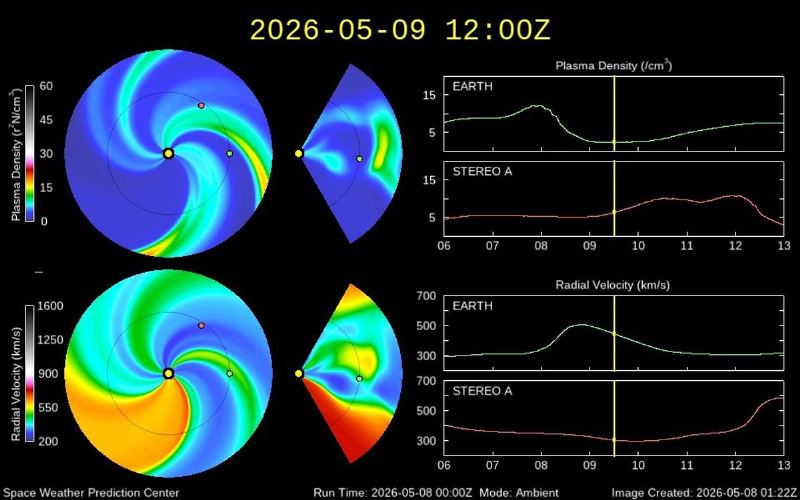
The source of the disturbance in the Earth's magnetosphere is a stream of plasma from a coronal hole on the Sun. The peak of geomagnetic activity is expected in the first half of the day according to Moscow time.
According to the WSA-Enlil solar wind propagation model, on May 8-9, Earth is expected to pass near the edge of the particle stream from the coronal hole. The spread of such streams can be imprecise, which may lead to either increased or decreased geomagnetic activity.
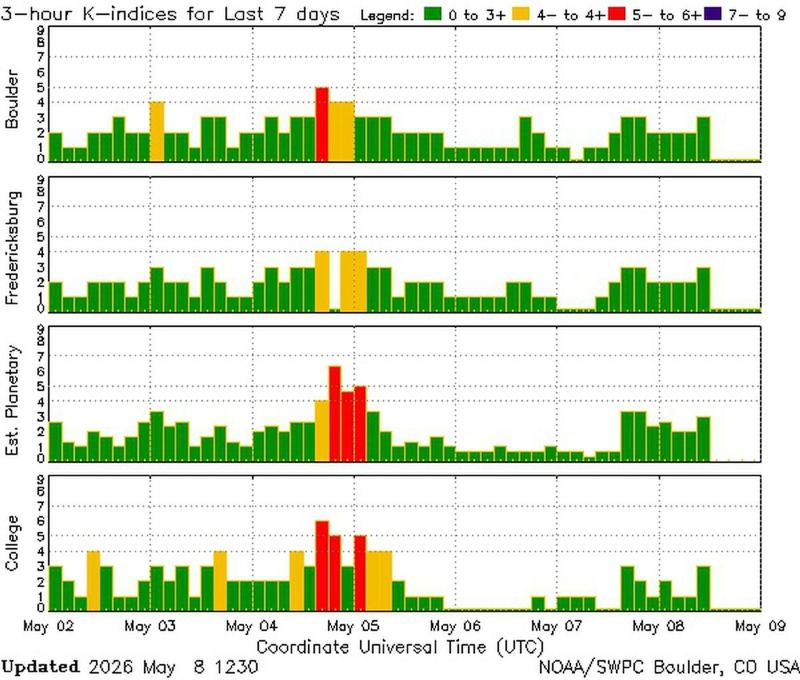
It seems unlikely that the flow of solar plasma can be avoided. NOAA detectors are already recording an increase in geomagnetic activity, but local magnetic storms have not yet been observed.
Read this article in full and everything else in Telegram, ad-free
Open in TelegramThanks, I just want to finish reading here
Earth is expected to exit the plasma stream around May 11, after which the geomagnetic situation should stabilize. However, another threat is approaching — one more serious than the coronal hole.
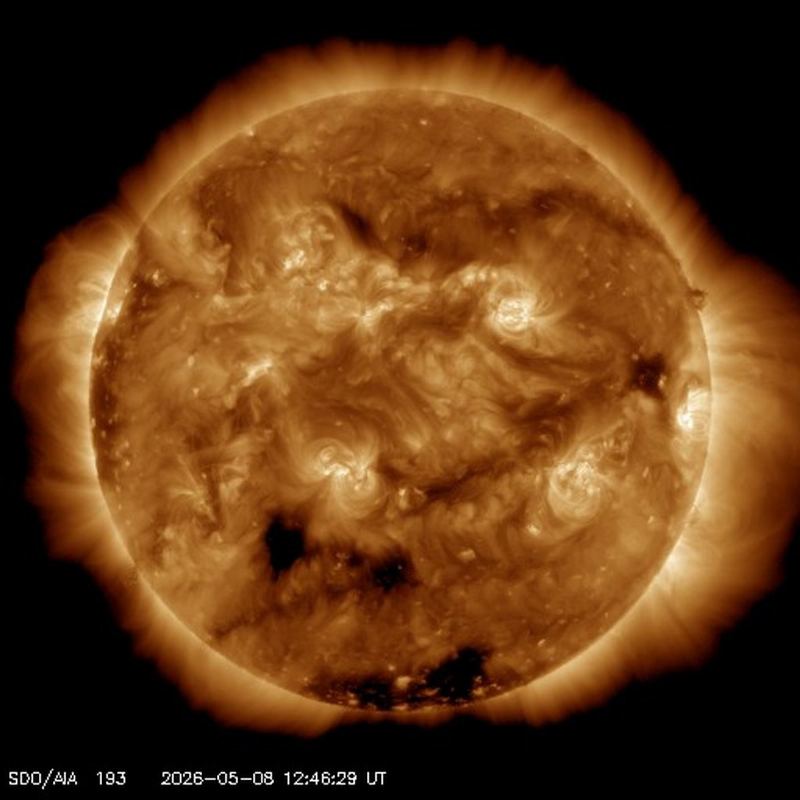
A large and unstable sunspot is currently located on the edge of the visible part of the Sun, gradually turning towards Earth. In recent days, this spot has become the source of several coronal mass ejections.
If the magnetic field of the sunspot does not stabilize, its coronal ejections are likely to reach Earth, resulting in significant geomagnetic storms.
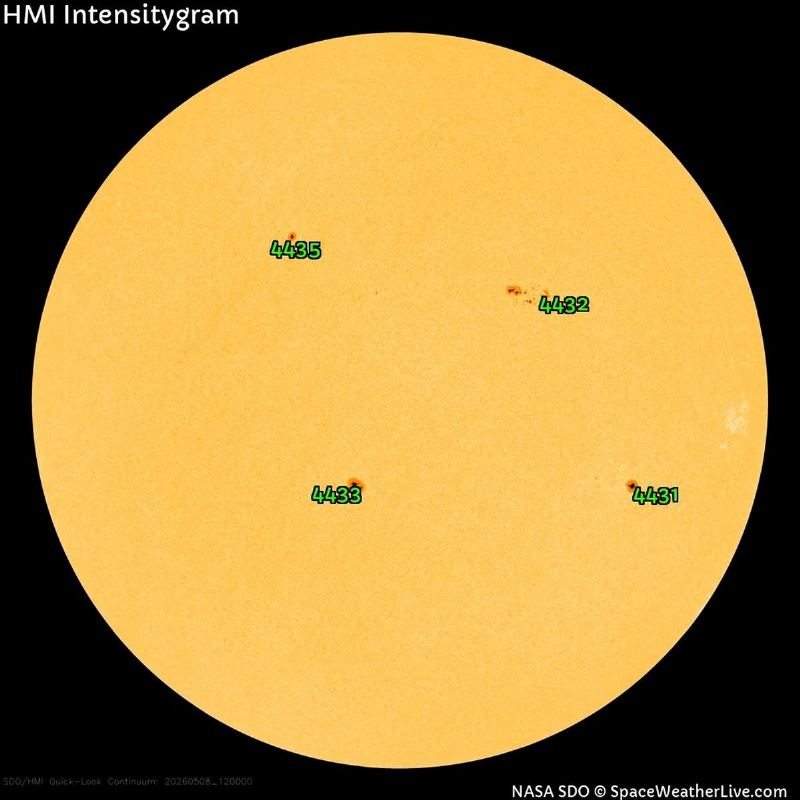
Currently, only a glow is visible in the area where this sunspot will appear. Analysts have already increased the probability of new flares: for X-class flares, the probability has risen from 1% to 10%, and for M-class flares, it has increased from 25% to 45%.