Venice Biennale 2026: Embracing Slowness and Soulfulness in Art
The Venice Biennale is one of the most significant art events in the world, reflecting the contemporary socio-political context and commenting on it.
For its 61st edition, the late curator Koyo Kuo envisioned a reorientation of the exhibition, moving away from the "disturbing cacophony of current chaos" and focusing on softer emotions, interconnectedness, and rootedness, embodied in the theme "In Minor Keys".
Following her death in May 2025, the concept is being realized by her team, setting the framework for the central exhibition at two venues in Giardini and Arsenale, featuring 111 artists and guiding themes for national pavilions.
Spirituality, Sensuality, and Soulfulness
Kuo's polyphonic theme manifests in interconnected motifs: Sanctuaries, Processions, Schools, Rest, and Performances, intertwining values of silence, care, and reflection.
The exhibition explores how connections can arise unconsciously when the interests of unrelated artists and movements reveal kinship, expanding what Kuo termed "relational geography," defined by encounters and the memories they evoke.
Visitors are invited to navigate the exhibition in a meditative state, reconnecting with the soulful and spiritual – to "tune in sotto voce." This radical invitation to slow down in a space where "time is not corporate property" is a call to reflect, as Kuo wrote in her manifesto.
Gardens and Oases
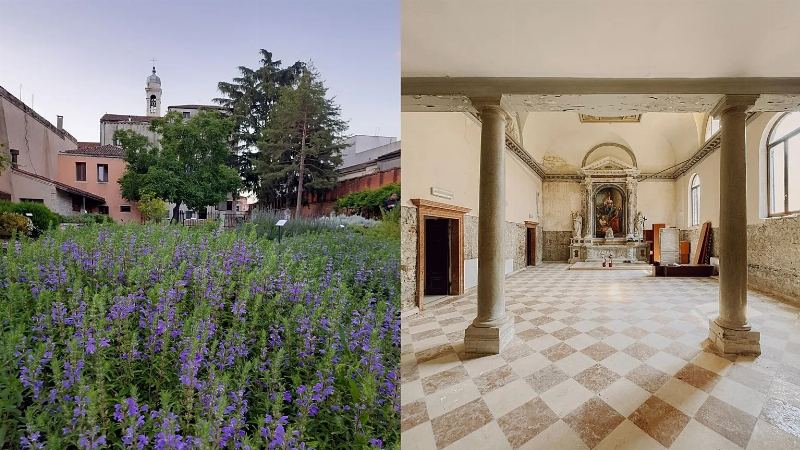
A key feature of the exhibition is the introduction of an "archipelago of oases," spaces rich in memory and emotion that were central to the lives of major artists. Among them are the former courtyard of Issa Samba in Dakar, Marcel Duchamp's last studio, and the Village Ki-Yi MBock theater cooperative in Abidjan.
Linda Good Bryant's project Still Life will represent an urban farm tended by women who have previously served prison sentences.
Kuo's motif of Schools also represents a kind of garden for nurturing and growing knowledge and creativity, featuring artist-led initiatives such as Raw Material Company in Dakar and GAS Foundation in Lagos, united by an "ethics of gathering and knowledge exchange".
Read this article in full and everything else in Telegram, ad-free
Open in TelegramThanks, I just want to finish reading here
Some national pavilions will also be transformed into spaces for contemplation. The Vatican Pavilion will feature a sound experience inspired by the texts of 12th-century abbess Hildegard of Bingen, allowing visitors to listen to a "sound prayer" while strolling through a secluded 17th-century garden.
For Qatar, artist Rirkrit Tiravanija has designed a tent for cultural exchange, featuring a film by Qatari-American artist Sophia Al-Maria and live performances organized by Lebanese artist Tarek Atoui.
Processions and Carnival
Kuo's motif of Processions celebrates human connection and collective participation. Artists explore gatherings, ranging from cyclical celebrations and rituals in centers and peripheries of the diaspora to interactions between the living and ancestors.
Carnival is presented as a "seam in time" where power relations are momentarily disrupted. Established norms of art history and classical literature are turned upside down in the works of Johannes Fokela, Tammy Nguyen, Buhlebezwe Siwani, Sammy Baloji, and Godfried Donkor.
The central exhibition installation, designed by Wolff Architects, is inspired by Gabriel Garcia Marquez's "One Hundred Years of Solitude" and Toni Morrison's "Beloved," creating a viewer experience that appeals to feelings rather than instructs, encouraging intimacy and interaction.
The Japanese Pavilion also emphasizes participation with the project Grass Babies, where visitors are invited to take one of 200 baby dolls and carry it through the pavilion's arches, gardens, and interior spaces. By engaging in this act of collective care, visitors change the dolls' diapers and activate a QR code that provides a "diaper poem" based on each "baby's" assigned birth date.