Triple Threat to Antarctica: Unraveling the Mystery of Melting Sea Ice
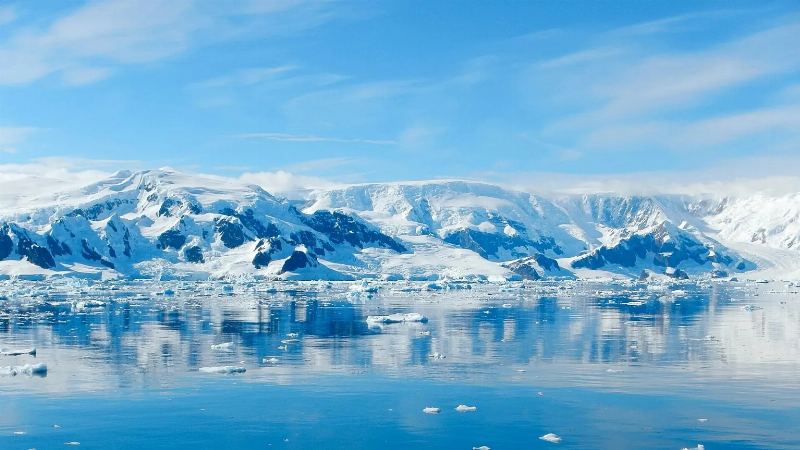
Researchers have uncovered the "triple threat" behind the rapid melting of Antarctica's sea ice, shedding light on the chain reaction that has led to record low levels.
The study reveals that a combination of deep ocean heat, powerful winds, and a self-reinforcing cycle since 2015 has destabilized the Southern Ocean waters around Antarctica, preventing the sea ice from recovering.
Scientists warn that such losses could disrupt ocean currents, accelerate warming, and contribute to rising sea levels worldwide.
The research, conducted by experts from the University of Southampton and published in the journal Science Advances, showed that this collapse has developed over the past decade in three stages.
According to the lead author, the scale of the losses is so significant that the area of lost sea ice is nearly comparable to the territory of Greenland.
"Initially, deep ocean heat accumulated slowly beneath the Antarctic sea ice, then powerful mixing of waters began, ultimately creating a vicious cycle: the water is too warm for the ice to recover," he explains.
Why is Antarctica Losing Sea Ice?
Since around 2013, strengthening winds have been pulling warm salty water from the depths of the ocean—known as circumpolar deep water—closer to the surface beneath the Antarctic sea ice.
Soon, powerful winds began pushing this heat upward, which, as the study showed, led to rapid melting of sea ice in East Antarctica.
Since 2018, the region has been trapped in a feedback loop. The less ice remains to melt, the warmer and saltier the ocean surface stays. According to scientists, under such conditions, new ice finds it increasingly difficult to form.
The authors also found significant differences in how ice loss occurs in different parts of the continent.
In East Antarctica, the reduction of ice cover is primarily linked to the rise of warm water from the depths. In West Antarctica, warm air masses from the subtropics and persistent cloud cover play a crucial role in retaining heat at the ocean surface, contributing to major melting events in the summers of 2016 and 2019.
Researchers note that climate change is intensifying this effect as strengthening winds pull this water closer to the surface beneath the ice.
Read this article in full and everything else in Telegram, ad-free
Open in TelegramThanks, I just want to finish reading here
What Are the Consequences of Sea Ice Loss in Antarctica?
Sea ice around Antarctica plays a far more critical role in the global climate than one might think, given its remote location.
Its bright white surface helps reflect heat from the planet, sending back into space up to 80 percent of solar radiation, according to the Australian Antarctic Program. When the ice disappears, the dark ocean surface beneath absorbs more heat, accelerating warming.
Warmer ocean water can erode ice both on land and at sea, increasing the risk of shelf ice collapse. When this occurs, sea levels rise, and this increase has long been linked to coastal flooding and shoreline erosion.
Scientists estimate that every centimeter of sea level rise puts about six million people at risk of coastal flooding.
"This is not just a regional problem," says a co-author of the study.
The findings heighten concerns that certain areas of Antarctica may be approaching dangerous climate tipping points.
"If the low sea ice extent persists into 2030 and beyond, the ocean could shift from being a stabilizer of the global climate to a powerful new driver of global warming," warns a professor of physical oceanography at the University of Southampton.
The Human Factor in Antarctica's Fragile Future
According to NASA, from 2002 to 2020, Antarctica lost about 149 billion tons of ice annually. Yet, despite the melting sea ice and increasing instability in the region, more people are traveling there to see it for themselves.
According to the International Association of Antarctica Tour Operators (IAATO), around 122,000 people visited the continent in 2024, compared to about 44,000 in 2017.
Researchers from the University of Tasmania predict that by 2033, the number of tourists could exceed 450,000 per year.
However, the boom in "last chance tourism" creates additional pressure on an already vulnerable ecosystem. As visitor numbers rise, scientists and environmental organizations warn of increased risks of pollution, invasive species introduction, and disease outbreaks.