California Faces Historic Earthquake Risk as Tectonic Pressure Peaks
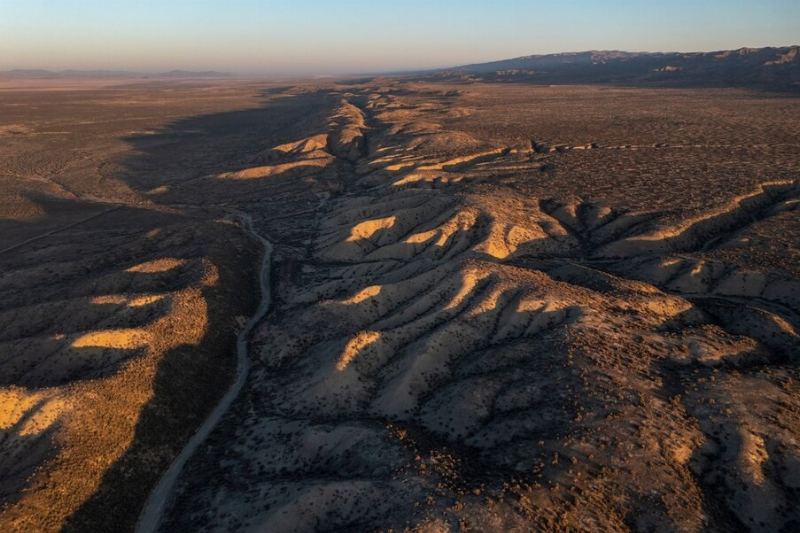
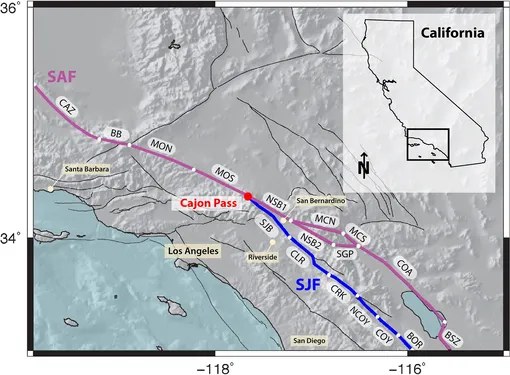
Researchers from the University of Hawaii at Manoa have found that the San Andreas and San Jacinto fault systems in Southern California have reached a critical level of stress, the highest in a thousand years. Computer modeling covering a millennium of earthquake history warns of the risk of a massive rupture. Researchers focused on Cajon Pass, a unique "earthquake gateway" that could trigger a destructive impulse in both systems.
The San Andreas fault, stretching over 1300 kilometers, separates the Pacific and North American tectonic plates. They slide horizontally against each other at a rate of about 3-5 centimeters per year. This constant movement is blocked by friction in the rocks, causing the fault to "stick," while colossal elastic deformation energy accumulates in the upper layers of the Earth's crust for decades. Seismologists compare this process to a compressed spring: the longer the quiet period lasts, the more powerful and destructive the inevitable underground shock will be when the strength limit of the rocks is finally exceeded.
Read this article in full and everything else in Telegram, ad-free
Open in TelegramThanks, I just want to finish reading here
The main driving force behind California's seismicity remains the tectonic movement of plates, which continuously accumulates energy in the Earth's interior. The last major event in the region occurred over a century and a half ago, and since then, geological pressure has been building without release. The study is published in the Journal of Geophysical Research: Solid Earth.
Lead author Lillian Burkhardt notes that while physical models cannot predict the exact date of a disaster, they clearly demonstrate scenarios that need to be prepared for.
Local residents and emergency services have long been living in anticipation of the so-called "Big One" — a mega-earthquake capable of completely paralyzing the region. Historical experience shows how vulnerable infrastructure is in the face of underground forces: the 1994 Northridge earthquake in Los Angeles claimed dozens of lives and destroyed tens of thousands of buildings, even though its scale was significantly smaller than the potential mega-catastrophe.
The Cajon Pass Effect

The uniqueness of the current threat lies in the synchronization of the two largest faults through Cajon Pass, which is located right at their junction. Depending on current conditions, this section can either block or trigger a seismic rupture.
Currently, conditions are favoring the worst-case scenario, as stress levels on both branches have nearly equalized. If a rupture occurs, it will not remain within one system but will instantly transfer to the neighboring one, causing a cumulative effect and catastrophic consequences for all of Southern California.