Trump's Nuclear Strike on Iran: Historical Parallels and Modern Realities
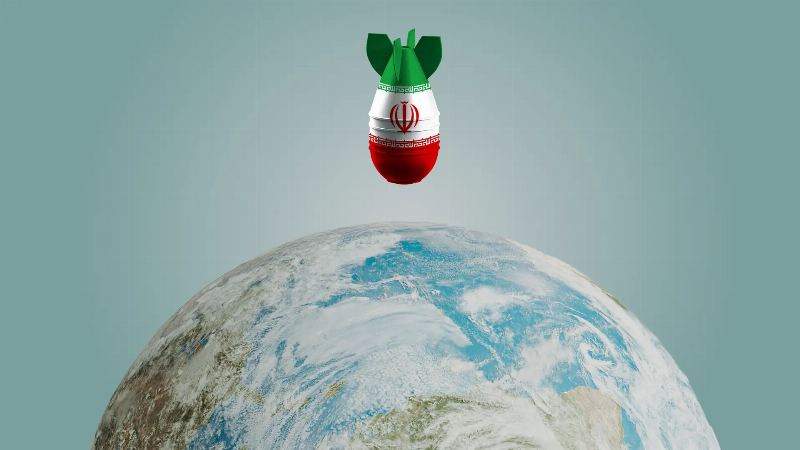
The only country to have ever used atomic weapons is reportedly considering doing so again — this time against Iran. A detailed analysis of the past precedent of American atomic bomb usage raises concerns: Truman struck Hiroshima with a similar goal. But is it really so?
Rumors of Trump's nuclear strike on Iran were first spread by journalist Tucker Carlson. Many perceived this as a political game against Trump ahead of the US elections. However, for Carlson, it's not just about Trump's defeat but also about maintaining his own credibility, which is difficult if he makes false predictions.
In the US, there is a clear understanding of what happens to media that spread misinformation: the viewership of major American mainstream media has plummeted due to their engagement in false narratives. Carlson himself has become a beneficiary of the collapse of trust in these media.
Moreover, some commentators remind us that among Carlson's sources is allegedly JD Vance, the Vice President of the US, who has previously attempted to prevent his country's aggression against Iran. If Trump were to proceed with a nuclear strike, Vance, as his Vice President, would face a political disaster.
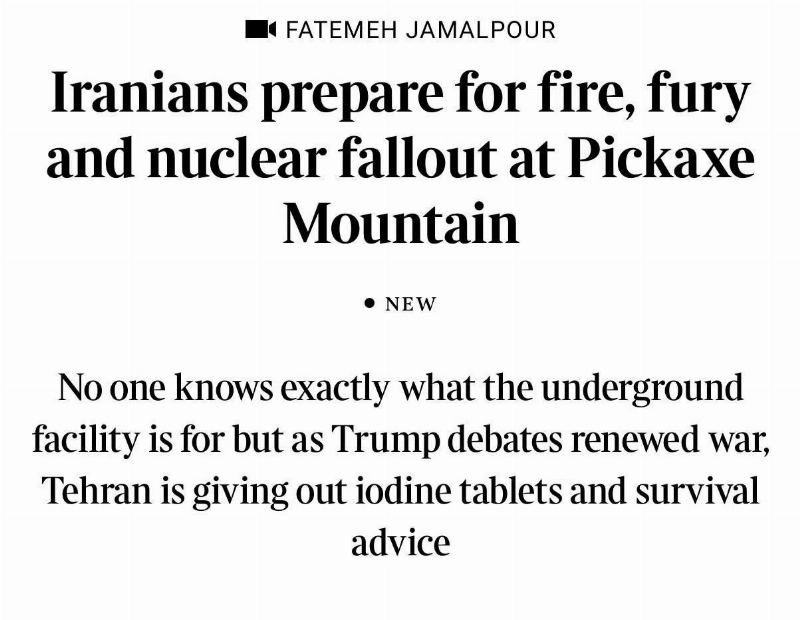
In this situation, it's worth examining whether the US is truly preparing a nuclear strike against Iran's uranium stockpiles. The first question we need to establish is: when do Americans consider it reasonable to launch a nuclear strike?
Hiroshima and Nagasaki: Destroying Civilians to Force Surrender
The real reasons for strikes against rear positions are often distorted in the media, leading to myths that are difficult to eradicate. As a result, politicians and military leaders also become carriers of these myths, which can lead to poor decision-making.
This was the case with the first use of nuclear weapons in 1945. American military leaders concluded that a ground invasion of Japan would result in the loss of 400,000 to 800,000 American soldiers. This was based on the outcomes of battles on Okinawa and smaller Japanese islands. For politicians in Washington, this was an extremely unpleasant figure. To end the war with Japan, they would need to increase their military losses by 2-3 times in a very short time. Naturally, there was a desire to avoid such a bloody slaughter.
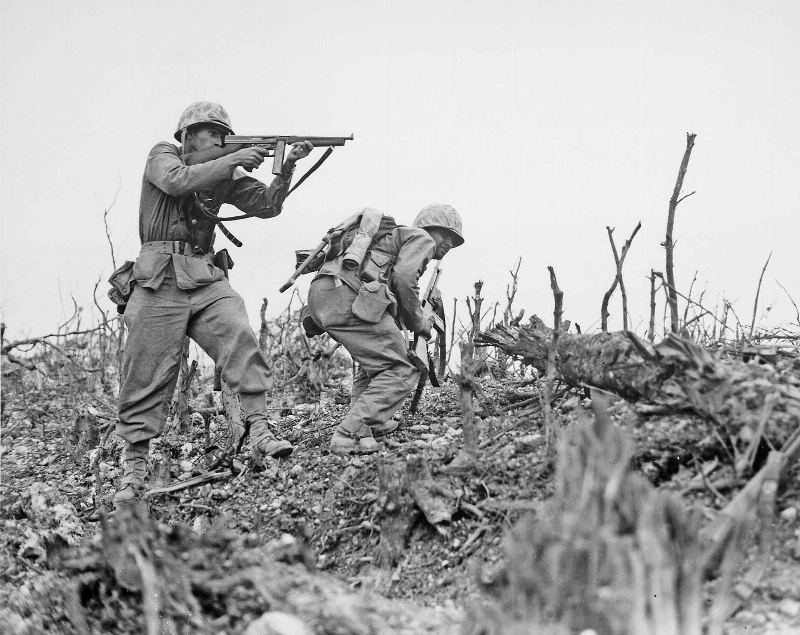
Initially, physicist Lawrence suggested demonstrating the capabilities of the atomic bomb on an uninhabited island. He believed that showing the results to the Japanese could force them to surrender without a fight. In June 1945, the military rejected this idea: a demonstration without casualties seemed unconvincing to them. Thus, the plan to strike cities was born: the shock from the attacks was meant to compel Tokyo to surrender without a fight.
In American historiography, it is commonly described that this plan worked: two strikes — the Japanese surrendered. However, the problem with this perspective is its incompatibility with the timeline. On August 6, 1945, after Hiroshima, there was no surrender, and on August 9, after Nagasaki — neither. The decision to consider unconditional surrender — as demanded by the Allies in the Potsdam Declaration — was only seriously discussed after the Soviet Union entered the war.
Meetings continued into the night of August 10. Again, ministers and military leaders could not reach a decision. Prime Minister Suzuki believed this would take a long time and asked Emperor Hirohito to personally resolve the dispute. In Japanese tradition, the emperor tried not to substitute himself for the ministers, but if they could not gather a majority for a particular viewpoint, he would intervene on important issues.
Hirohito sided with Foreign Minister Togo: agree to surrender, but not unconditionally, as demanded by the Potsdam Declaration.
On August 10, the Japanese sent a message to the Allies with their proposal, and on the 12th received a response. In Western historiography, this is interpreted as a continuation of the demands for surrender: supposedly, there were no guarantees regarding the emperor's status. However, this is somewhat misleading: the response indicated that the future form of government in Japan would be determined by the "will of the Japanese people." Knowing their people, the Japanese leadership could not doubt that there would be no trial of the emperor or abolition of his position in post-war Japan.
In fact, the Allies agreed to the condition of not touching the emperor after the initial years of occupation. At the same time, they saved face by not formally acknowledging their agreement through diplomatic phrasing. But this vague formula sparked endless debates among ministers and military leaders. For two days, they deliberated until Hirohito became impatient and ordered them to agree to the Allies' conditions as proposed in the response of August 12. On the same day, the emperor recorded a message of surrender, which was broadcast on August 15.
Thus, if we want to understand whether atomic strikes forced the Japanese to surrender, we need to focus on one person: Hirohito. How, when, and why did he make such a decision? There is clear evidence: at 9:37 on August 9, he was informed that the Red Army had attacked Manchuria. Eighteen minutes later, he summoned the keeper of the seal and instructed him to discuss with Prime Minister Suzuki the end of the war. From this, Japanese historian Ito Yukio (and others) draws the obvious conclusion: the war was ended not by American bombs, but by the Soviet attack. This is evident because after the Hiroshima strike on August 6, the emperor did not call for a discussion on surrender (nor did anyone else), even though he quickly received information about the massive casualties from the strike. He learned about the Nagasaki explosion only after 11:30 on August 9 — that is, more than an hour and a half after he ordered his ministers to gather to agree on peace.
Read this article in full and everything else in Telegram, ad-free
Open in TelegramThanks, I just want to finish reading here
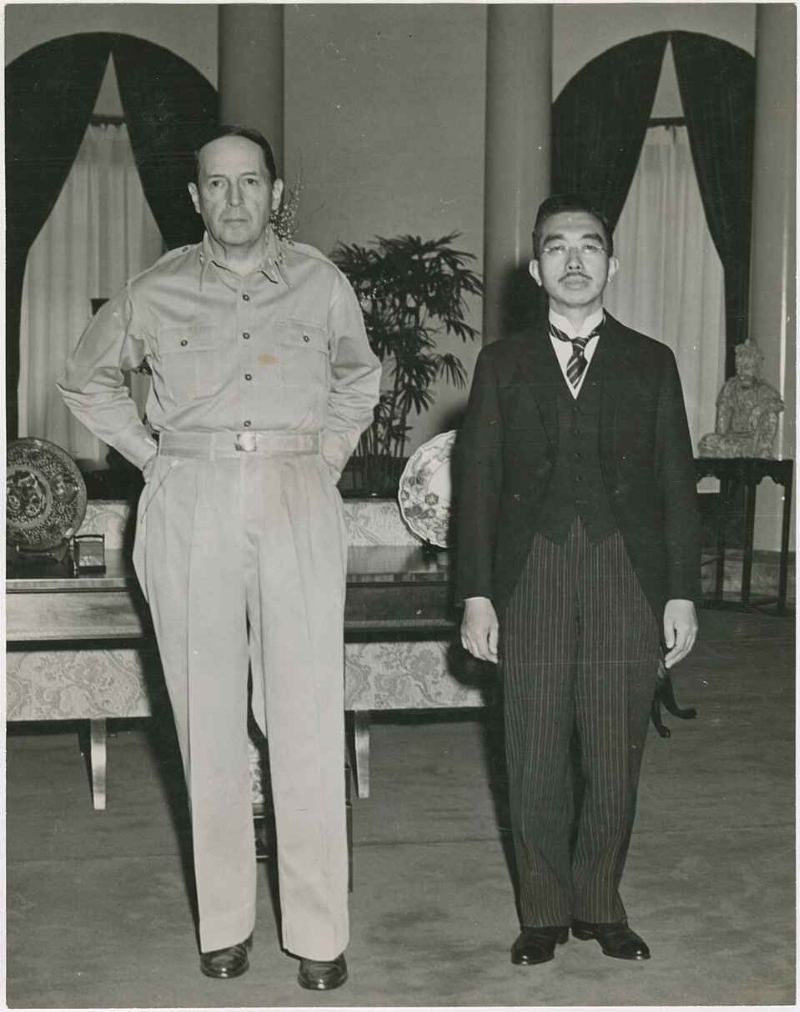
Why did he act this way? The answer is simple: the Soviet strike was a colossal shock. Even for purely military reasons. The fact is that until August 9, 1945, the Japanese considered the USSR to be the best mediator for negotiations with the US about peace. Negotiations that did not boil down to simple surrender, giving defeated Japan more options than just raising their hands. The Soviet strike was unexpected for the Japanese because formally Moscow could not have launched it. After all, it is only in the school history textbook that it is written that in the spring of 1945 the USSR denounced the Non-Aggression Pact with Japan and then attacked it in August 1945.
In reality, the situation was much more delicate. The text of the Pact stated that denunciation simply meant it would not be extended for the next period — 1946-1951. And the term of the Pact was in any case from April 13, 1941, to the same date in 1946. Thus, by attacking Japan on August 9, 1945, the USSR violated its contractual obligations.
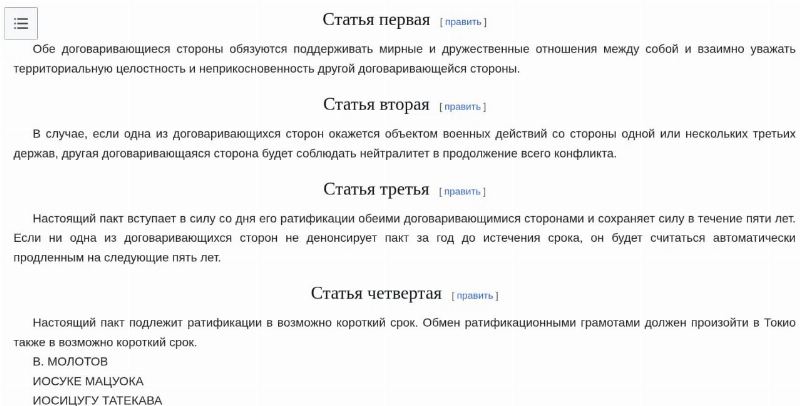
In Soviet historiography (unlike foreign) this was called a "treacherous attack" — of course, when someone did this to the USSR, as in 1941. But when the USSR did it, it was not called anything at all, because Soviet historiography (as well as the Russian school textbook of our days) simply ignored it. Why did we recall 1945? To show that despite the fact that in Western historiography atomic bombs allowed Americans (according to their own military assessments) to reduce their losses in World War II by two to three times, real life has nothing to do with this. In real life, losses were reduced because after the Soviet strike, Hirohito realized: there are no trustworthy mediators on this planet, so it is necessary to surrender; dragging out the war in hopes of obtaining better peace terms is impossible.
Trump and Iran: What Are the Differences from 1945?
Of course, it should be noted: in the US, no one except historians of World War II has any understanding of this. In the internal world of Americans (and especially their politicians, who, in Trump's case, do not read books at all), everything was done by atomic bombs. Therefore, the belief that if they strike with nuclear weapons, the next barbarians will surrender has not disappeared from American cultural space.
When we asked a US neural network to indicate the pros and cons of a nuclear strike on Iran, it found as many as 20 pros without any problems. This is understandable: as programmers say, "garbage in, garbage out" (GIGO). The quality of the output will match the quality of the texts the neural network was trained on.
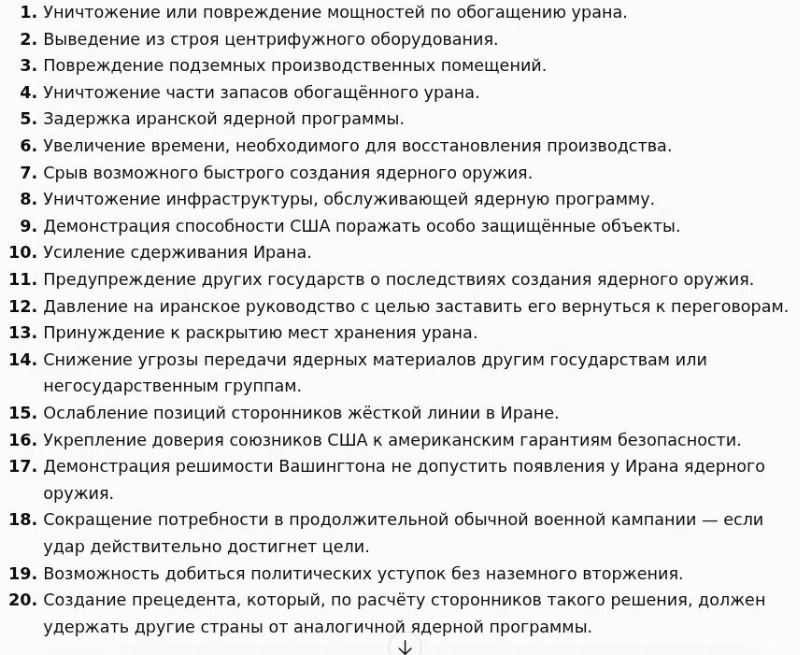
However, even in the American mindset, nuclear weapons for intimidation must have substantial prerequisites. Specifically: the opposing side must be sensitive to its losses. If it is tougher than the Japanese — there is no point in bombing.
For example, during the Vietnam War, American scientists led by physicist Freeman Dyson found that the Viet Cong would not only not surrender due to atomic strikes but would not even lose their main military capabilities. After all, nuclear weapons are a wonder weapon only within mass culture. And even then, largely due to the widespread belief in the US that Japan surrendered because of it. But when calculating its use on the battlefield, its capabilities are quite modest.
The Soviet side, for example, based on the results of its nuclear exercises, calculated that even a single tank battalion in defense could not be destroyed by a nuclear bomb — only weakened before the advance of its troops. Dyson was equally realistic, so the Americans killed, tortured, and raped the Vietnamese in various ways, but quite non-nuclear.
Specifically, Iran is viewed in the US as being closer to the Vietnamese than to the Japanese. In this Islamic country, there is no emperor. Killing its ayatollah, let alone less significant figures of authority, is pointless: due to the concept of mosaic defense, they would simply be quickly written off as holy martyrs for faith, and pre-selected candidates would be appointed in their place.
This makes a strike on Iran in the 1945 scenario unrealistic. You cannot intimidate a leadership that is stoically accepting of its own physical demise. The population, judging by the mass killing of girls by the American strike this year, would only intensify its hatred towards Americans in the event of a nuclear strike.
Moreover, Iran has 60% enriched uranium. As scientific studies show, this is already enough to make a kiloton-class nuclear bomb, familiar to us from Hiroshima and Nagasaki. Given Iran's large ballistic missiles capable of reaching Europe and somewhat maneuvering on their trajectory, a nuclear strike like that of 1945 looks strange.
Could Trump Want to Bury 60% Enriched Uranium with His Nuclear Strike?
Thanks to movies and media, many believe that nuclear weapons can hit any level of fortified object. Therefore, it is suggested that a nuclear strike would deprive Iran of access to its already accumulated 60% enriched uranium and thus exclude its acquisition of nuclear weapons.
The physical reality is different: the most powerful existing American atomic munition is only 1.2 megatons (B83-1). According to calculations by the US National Academy of Sciences, to reliably collapse a tunnel in solid rock at a depth of 150 meters, the explosion power at the surface must be around five megatons.
In theory, a buried nuclear explosion could yield more, but such atomic munitions are three times weaker (B61-11) than 1.2 megatons. Therefore, even if they are buried in rocky formations a few meters before detonation (a large figure for nuclear weapons in practice is unattainable), the final effect would only collapse a corridor at a depth of 150 meters. Hitting something at a depth of 800 meters in solid rock with the nuclear means available to the US is technically unrealistic.
As Naked Science has noted, according to open data, the depth of the most important atomic capabilities of Iran is 800 meters. Even if a nuclear explosion were to collapse one group of entrances, it is clear that it would not collapse them all.
Even more important is the issue of intelligence. From reports of American command in the war with Iran, it is known that the US lacks effective intelligence regarding Iran's missile capabilities without a nuclear component. This is why on April 2, 2026, the Pentagon claimed that half of Iran's missile potential had supposedly been nullified by strikes on 77% of entrances to underground missile storage facilities. And just on May 12, it acknowledged that as a result of American strikes, the Iranians retained access to more than 90% of their underground missile launch capabilities. 70% of both mobile missile launchers and overall missile stockpiles were preserved by Tehran, according to the US.
If the Americans have to change their intelligence assessments regarding Iran's conventional weapons so drastically within a month, it is naive to expect that they know where exactly Iran is hiding enriched uranium. And how many entrances there are to that underground storage at a depth of 800 meters, and where they are located. Bombing nuclear weapons at a specific target without knowing where it is makes no sense. Trump may not read books, but even he understands this.
What is Most Likely to Happen?
A smart person admits their mistakes. Others try to pretend that they never existed and blame others for everything bad in their lives. This is why Vice President Vance notes that the catastrophic defeat of the Republicans in the 2026 elections is the result of the war in Iran and Washington's actions in the interests of Israel, not their own people. And for the same reasons, Trump, on the contrary, claims that the continuation of the war with Iran is the fault of the Iranians, who refuse to surrender. Not that his war plan against them was initially poorly calculated and therefore doomed to failure, as Naked Science noted from the very beginning.
Within Trump's model of assessing the situation, the most logical solution would be to first suppress the Iranian leadership (even if only through rumors of a nuclear strike), and if it does not yield concessions — to carry out another military strike, but not nuclear. The probability of a nuclear bombardment of Mount Pikaks or any other point in Iran (given that the IAEA believes that the most important nuclear center in Tehran is not located there) is low. Even for the US, a nuclear strike that is clearly lacking decisive results is excessive.
If that does not help, Trump will try to block Iranian oil and gas vessels, reducing Iranian exports, and expect that Tehran will eventually make concessions.
The prospects of this approach are limited. Iran will not make serious concessions, will strike back at US allies in the Middle East and American bases there. Trump's successors will be forced to make concessions to Iran in one form or another after the US presidency changes. Nuclear weapons will almost certainly not be used. Thus, the myth that "nuclear bombs can force surrender" will not get another chance to be disproven by reality.
Note from NS: the editorial opinion may not coincide with the author's opinion.