Eurozone Inflation Rises Again: Lithuania Takes the Lead
Inflation slowdown in Europe was short-lived.
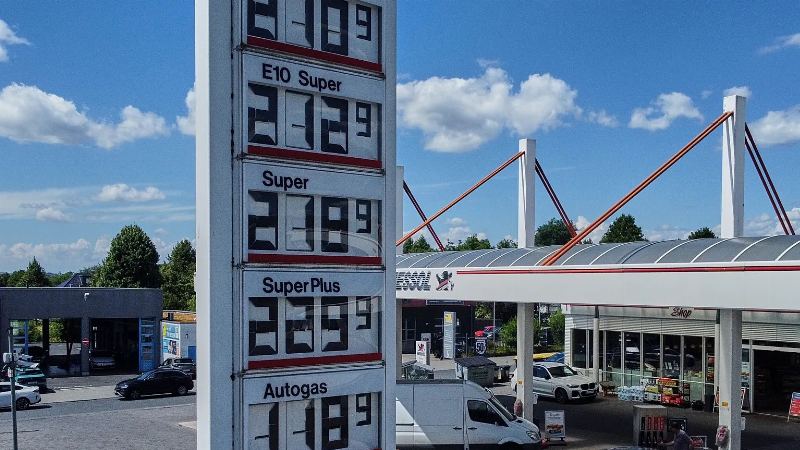
After easing in June, consumer price growth in the eurozone accelerated again in July: the renewed conflict in the Middle East is pushing energy prices up.
According to preliminary estimates from Eurostat, the annual inflation rate in the currency bloc rose to 2.9% in July from 2.8% in June, matching economists' expectations.
Core inflation, excluding food and energy prices, also slightly increased to 2.5% from 2.4%. The highest annual growth was seen in energy prices, which rose by 10% year-on-year, followed by services, which increased by 3.3%.
This occurred just a day after the eurozone's GDP unexpectedly showed acceleration in the second quarter, reinforcing the view that Europe's economy remains much more resilient than many had feared.
However, behind the overall figures lie sharp differences: inflationary trends in eurozone countries vary significantly – in some, price pressure is increasing, while in others, it is noticeably weakening.
Lithuania Remains the Inflation Hotspot
In July, Lithuania recorded the highest inflation in the eurozone at 5.6%, followed by Bulgaria (4.1%), Cyprus (4.0%), Spain (3.8%), and Croatia (3.6%).
On the opposite end, Estonia had the lowest annual inflation at 2.0%, followed by Malta (2.1%), France (2.4%), Latvia (2.5%), Austria (2.6%), and Finland (2.6%).
Read this article in full and everything else in Telegram, ad-free
Open in TelegramThanks, I just want to finish reading here
In Germany, the largest economy in the currency bloc, inflation accelerated to 2.8%, while in Italy, it matched the eurozone average of 2.9%.
“We believe that overall inflation in the eurozone will remain steadily just above 2.5%,” commented Klaus Vistesen, an economist at Pantheon Economics.
The company expects the European Central Bank to raise rates by another 25 basis points before taking a pause.
Where Inflation Accelerated and Where It Slowed
Compared to June, inflationary pressure in the currency bloc changed in very different directions.
The sharpest monthly increase was recorded in the Netherlands, where consumer prices rose by 1.5% compared to June, followed by Germany (+0.9%), France (+0.6%), Croatia (+0.6%), Malta (+0.6%), Estonia (+0.5%), and Bulgaria (+0.4%).
Conversely, the largest price decreases were seen in Greece (-1.4%), followed by Italy (-1.0%), Latvia (-0.7%), Belgium (-0.6%), Luxembourg (-0.6%), Austria (-0.4%), Portugal (-0.3%), and Slovenia (-0.3%).
“The ongoing conflict and spike in energy prices remain key risks for growth, considering that the eurozone is a net importer of energy,” said Matthew Ryan, head of market strategy at global financial firm Ebury.
“Although oil prices have retreated from peak levels, they remain elevated, and the rise in natural gas prices to multi-year highs only heightens concerns,” he added.
Markets Remain Risk-On
Risk appetite in the markets remained high following a strong rally on Wall Street the day before, when Microsoft shares surged 15% after impressive quarterly results, marking the strongest one-day gain since 2008.
Immediately after the inflation data was released, the euro strengthened slightly against the US dollar to 1.1520, and European stocks continued their Thursday rally.
The German DAX 40 index rose about 0.8%, hitting a record above 25,800 points, Euro Stoxx 50 gained over 1% and also reached an all-time high, the French CAC 40 increased by about 0.9%, while the Italian FTSE MIB outperformed the market, gaining nearly 1%.
Technology companies were again among the leaders in growth.
Shares of Infineon Technologies surged more than 6%, continuing the rally in the global semiconductor sector fueled by interest in artificial intelligence. STMicroelectronics shares rose more than 4%, while Siemens Energy shares gained about 3.5%.
Corporate earnings continued to support the positive sentiment.
Shares of Saint-Gobain rose after reports of higher revenue growth rates in the second quarter. NatWest shares increased amid a 29% jump in pre-tax profit, while Engie and Crédit Agricole also traded positively due to results that exceeded expectations.