Ancient Bird Figurines and Flute Found in Ice Age Cave
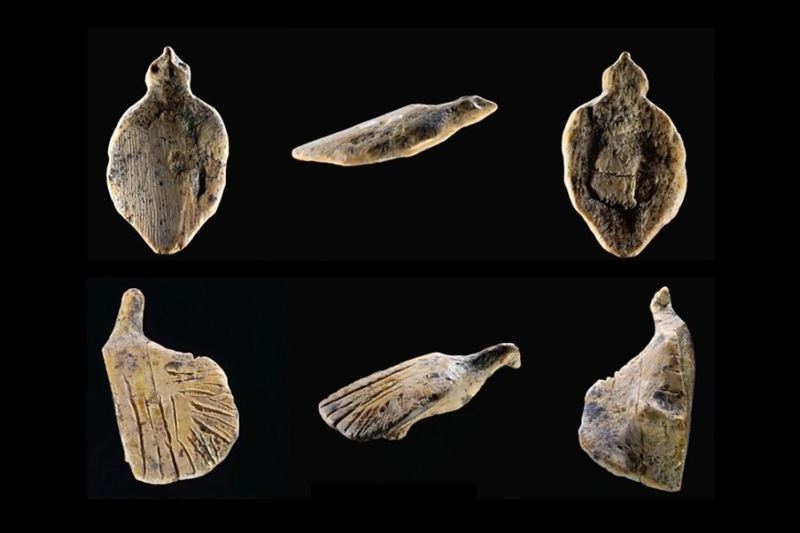
Researchers have unveiled remarkable finds from the Hohle Fels cave in southwestern Germany, dating back approximately 40,000 years. Among the latest discoveries are miniature bird figurines carved from mammoth ivory and fragments of a griffon bone flute. These artifacts, created by Cro-Magnon people of the Aurignacian culture, illustrate how cognitive and cultural advancements helped ancient humans adapt to Europe's harsh climate.
The oldest "Lion Man". The Swabian Jura region is also known for the Lion Man figurine from the Hohlenstein-Stadel cave. This 31-centimeter tall figure, depicting a human body with a lion's head, was carved from mammoth ivory around 40,000 years ago. It is considered the oldest known example of zoomorphic sculpture in the world. Creating such a masterpiece with flint tools would have taken the ancient artist about 360 hours of continuous work.
Archaeological excavations in the Hohle Fels cave have been ongoing for several decades, consistently yielding sensational results.

The Hohle Fels cave, located in the valley of the Ach River in southwestern Germany, has been intermittently studied for over a century.
Read this article in full and everything else in Telegram, ad-free
Open in TelegramThanks, I just want to finish reading here
Previously, famous artifacts like the Venus figurine and the oldest musical instruments were found here. The new artifacts — two miniature bird figurines measuring only two to three centimeters — were carefully extracted from sedimentary layers. One figurine depicts a resting bird, while the other resembles a flying partridge.
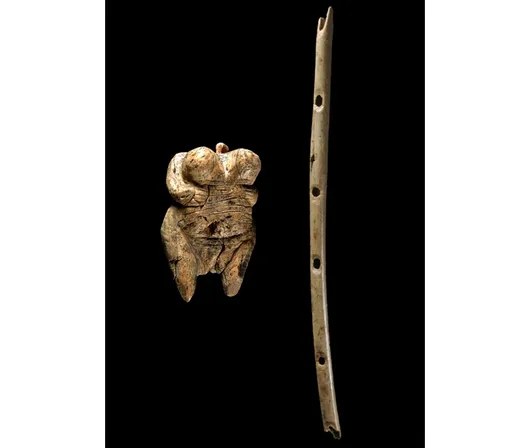
The flute, carved from griffon bone, was found less than a meter from the "Venus of Hohle Fels" figurine. This flute is one of the oldest known musical instruments in the world, suggesting that music once echoed in the cave. University of Tübingen
The finds demonstrate an astonishing level of skill and realism. Researchers believe that such a surge in symbolic thinking and art was not merely for entertainment. A complex culture fostered group cohesion, experience sharing, and memory preservation, ultimately giving Homo sapiens a key advantage over other extinct species.
The Mystery of the Cultural Explosion
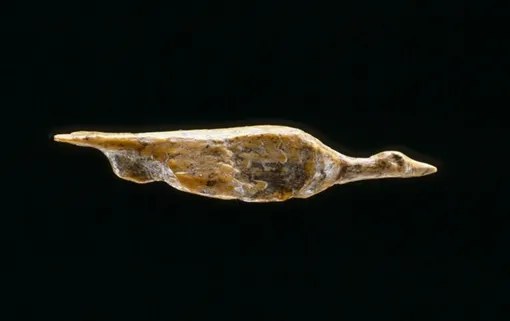
In the early 2000s, a figurine of a water bird was discovered in the Hohle Fels cave. Archaeologists hypothesize that water birds may have fascinated ancient hunter-gatherers, and their artistic representations could have played a role in spiritual rituals. University of Tübingen
According to excavation leader Nicholas Conard, this period marked the emergence of modern humans. Increased population density and competition for resources in the Swabian Jura may have triggered a so-called "cultural pump" — a mechanism that spawned a wave of innovations that spread throughout Europe.
To confirm their hypothesis and uncover the origins of the Aurignacian culture, scientists plan to extract ancient DNA from cave deposits. This will provide more insights into the lives of people who sought refuge in the cave during the harsh winters of the Ice Age and establish their genetic link to subsequent generations. Excavations continue, and archaeologists are confident that the Hohle Fels site will reveal much more about our past.
"It feels like this is the moment in evolution when we recognize ourselves in ancient humans," says archaeologist Nicholas Conard from the University of Tübingen.