Giant Mammoth Skeleton Discovered Along the Danube River in Bulgaria
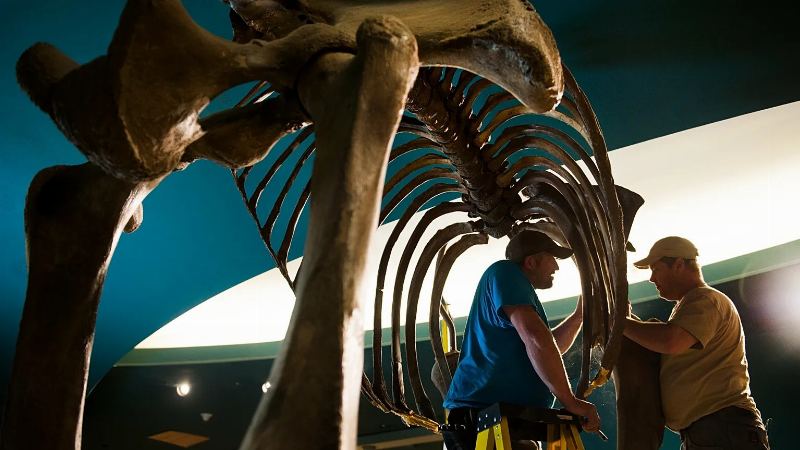
Along the banks of the Danube near the town of Riahovo in Bulgaria, the remains of an ancient mammoth have surfaced. The river, at historically low water levels due to recent heat waves, has revealed bones that, according to researchers from the Regional Historical Museum in Ruse, belong to the woolly mammoth (Mammuthus primigenius).
Researchers have identified the lower jaw, tusks, a shoulder blade, several ribs, and other bone fragments, but a significant portion of the skeleton likely remains buried.
Museum curator Krasimir Kirov stated that the animal stood nearly five meters tall and weighed over 7–8 tons. It may have been carried to this location by the Danube's current, where remains of prehistoric animals have accumulated over millennia.
Read this article in full and everything else in Telegram, ad-free
Open in TelegramThanks, I just want to finish reading here
This species existed approximately 500,000 to 10,000 years ago. The discovered bones date back thousands of years, and due to their prolonged exposure to water, they are carefully extracted from the riverbed, as they are extremely vulnerable to damage upon contact with air.
After necessary research and preservation measures, the remains are planned to be displayed at the museum in Ruse, located about thirty kilometers from the discovery site.
What the Shallow Danube Reveals
The Danube, flowing through ten countries from southwestern Germany to the Black Sea, has dropped to record low levels, exposing rocks, sandy shoals, and ancient sunken ships that were rarely seen before.
Shipwrecks have surfaced both in Hungary, near Mohács, and in Serbia, at the settlement of Prahovo, where German military vessels from World War II have re-emerged.
However, discoveries are not the only consequence of the low water levels in the Danube. In Hungary, there is currently a tense situation due to the forced shutdown of the Paks nuclear power plant, as the river's low water level has prevented adequate cooling.