Study Reveals Ancient Italian Childcare Practices Linked to Flat Head Syndrome
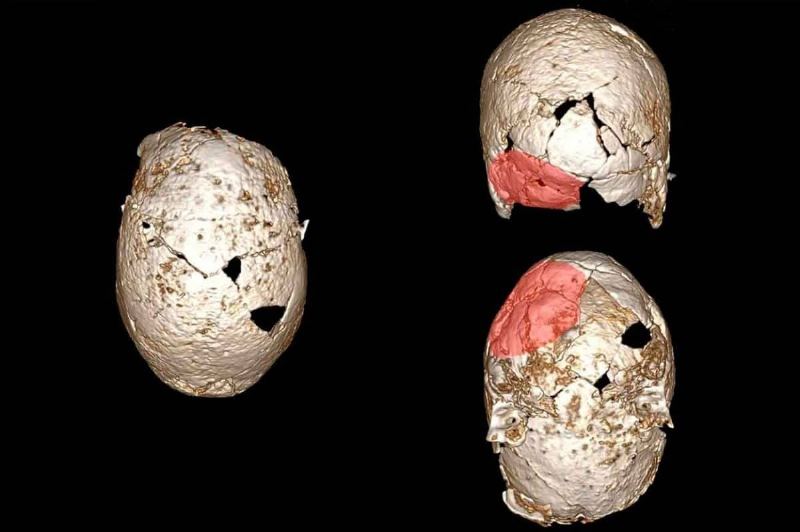
Researchers have studied the remains of early Iron Age inhabitants of Central Italy and reconstructed their infant care practices based on the shape of their skulls. The findings may provide insights into child-rearing in ancient societies.
A newborn's skull consists of several bony plates connected by flexible sutures. At the junctions of these sutures are soft areas called fontanelles. This anatomy facilitates the passage of the baby through the birth canal and allows the brain to grow.
As long as the sutures remain flexible and the anterior fontanelle has not closed, the shape of the head can change under external pressure — for example, if the baby lies in one position for too long. This results in flat head syndrome, known as positional plagiocephaly — an asymmetrical flattening of the back of the skull.
Read this article in full and everything else in Telegram, ad-free
Open in TelegramThanks, I just want to finish reading here
Modern medicine does not classify positional plagiocephaly as a dangerous condition. In most cases, it only affects the appearance of the head and does not impair brain function. However, pediatricians recommend frequently changing the baby's position, carrying them more, and placing them on their stomachs under adult supervision.
New data from a team of Italian researchers led by Michael Allen Beck De Lotto from Sapienza University of Rome significantly expand the understanding of the history of positional plagiocephaly.
The researchers examined 26 well-preserved human skulls found at two ancient cemeteries near the Italian town of Matelica. During the examination, the team discovered characteristic flattening on the occipital region of 11 skulls, indicating various head positions during sleep or rest.
The authors of the study suggest that the observed deformation may have been related to infant care practices, such as placing babies on their backs or tight swaddling.
The study's findings are published in the International Journal of Paleopathology.