Unique Metal Alloy Discovered from Hiroshima Atomic Bombing
Researchers have discovered a previously unknown multi-component metal alloy formed in the first seconds after the atomic bombing of Hiroshima on August 6, 1945. This finding shows that the extreme conditions of a nuclear explosion can create materials with unusual crystalline structures not found in conventional metallurgical processes.
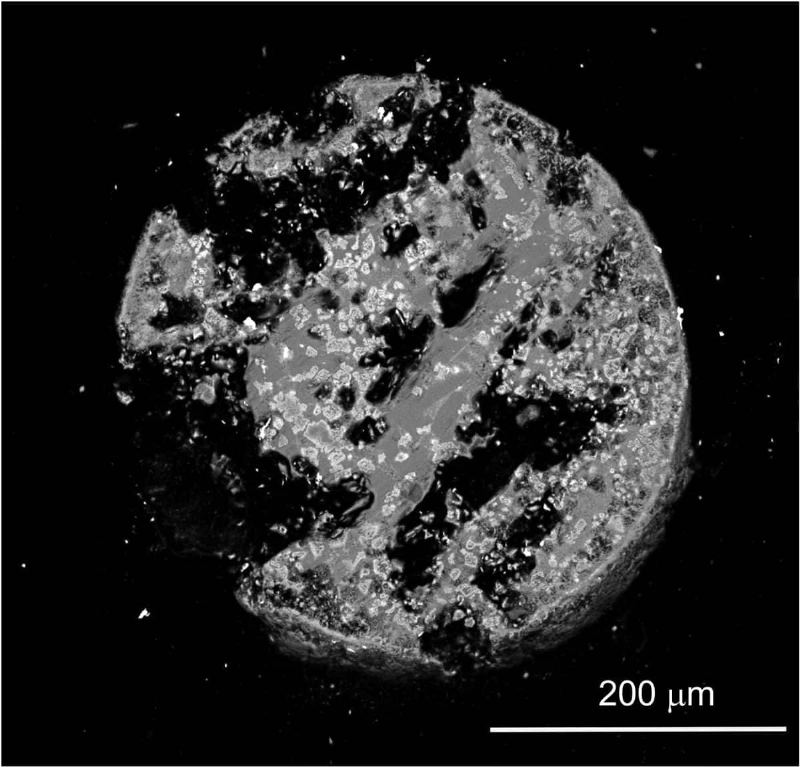
An international team from the University of Florence and the University of California, Berkeley studied hiroshimaites—microscopic glass spherules formed during the explosion. These particles have been preserved in the sands of Hiroshima Bay and represent a "snapshot" of the fireball created by the immense temperature that vaporized building materials and metals.
Read this article in full and everything else in Telegram, ad-free
Open in TelegramThanks, I just want to finish reading here
The temperature inside the fireball exceeded 7000 degrees Celsius in the first seconds after the explosion. Under these conditions, vapor from various materials was released into the atmosphere, which then condensed into tiny droplets and solid particles.
Analysis of 34 samples of hiroshimaites revealed that most metal inclusions were known iron-chromium alloys. However, one spherule contained a tiny metal particle primarily composed of iron, with chromium, nickel, silicon, molybdenum, manganese, and a small amount of aluminum.
The main discovery was the internal structure of the material. The alloy has an unusual ordered crystalline structure of the type AlAu4, previously unknown for such chemical compositions. Researchers concluded that this material may represent an intermediate class between high-entropy alloys and traditional ones.
The practical application of the new alloy remains unclear, as its mechanical and magnetic properties have not been measured.
In 2021, an unusual quasicrystal was found in the remnants of the first nuclear test, "Trinity," confirming that atomic explosions can form complex crystalline structures.