Ancient Bird Figurines Made of Mammoth Ivory Discovered in German Cave
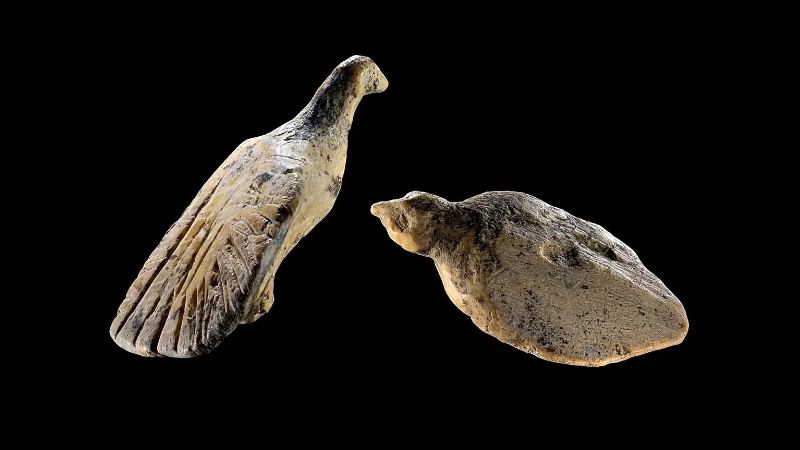
Both figurines, found by a team from the University of Tübingen in the lower layers of the cave, were likely created by people of the Aurignacian culture who lived in the region during the Upper Paleolithic.
The better-preserved carved figurine depicts a bird in a calm pose, possibly incubating eggs. The second shows a bird with outstretched wings, although its left wing is missing. Archaeologists found both figurines just about one and a half meters apart.
Miniature Carved Figurines from Mammoth Ivory
Both sculptures are so tiny that they fit on a fingernail and weigh only 1.3 and 0.7 grams, respectively. One of them — a bird with outstretched wings measuring just two centimeters — is now considered the smallest known artwork from the Ice Age ever discovered in this region.
Read this article in full and everything else in Telegram, ad-free
Open in TelegramThanks, I just want to finish reading here
“Mammoth ivory was used not just to create a simplified silhouette of a bird's body,” explains Nicholas Conard, an archaeologist from the University of Tübingen. “Careful observations of nature were embodied in the figurines with such a degree of detail that they can be studied to determine what species of birds are depicted and what they are doing.”
The resting bird, depicted lying flat, may represent a bird during incubation. The second figurine with outstretched wings may depict a bird during courtship behavior.
White Partridge or Capercaillie?
However, archaeologists are still unsure about the exact species of the birds. One theory suggests that the figurines depict white partridges, a cold-loving species whose bones are often found at prehistoric sites in this region.
They could also represent larger, pheasant-like birds — such as the capercaillie, a forest species known for its striking appearance and complex courtship rituals. The tiny size and stylized execution of the figurines make it difficult to determine the species definitively.
The figurines will be displayed at the Museum of Prehistory and Ice Age Art in Blaubeuren until April 4, 2027.