Spain Faces Migration Crisis: Intelligence Warned About Situation in Ceuta
Alberto Núñez Feijóo, leader of the People's Party, warned about the situation in Ceuta. New information from military and civilian intelligence indicates that the government had data on the risk of mass migration into Ceuta.
However, authorities did not take adequate measures. Warnings came in for several days, right up to hours before tens of thousands of people arrived in the autonomous city.
Intelligence services pointed to the likelihood that King Mohammed VI would perform a "gesture of goodwill" at the border in honor of Throne Day. This initial warning was later supplemented by reports of crossings by swimming from Castillejos and the arrival of buses from various regions of Morocco.
In just ten days, about a thousand people reached Ceuta by swimming — this movement was seen by intelligence as a preliminary "groundwork" by Moroccan authorities. This signal was also conveyed to the government.
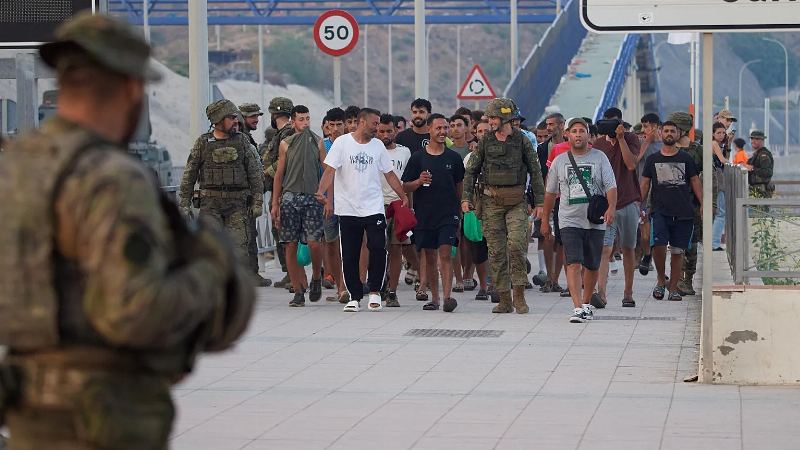
As a result, between 60,000 and 75,000 migrants crossed through the border — the largest migration crisis in the city's history. According to the Ministry of the Interior, about 53,000 people have already returned to Morocco.
Read this article in full and everything else in Telegram, ad-free
Open in TelegramThanks, I just want to finish reading here
Overwhelmed Border and the Role of the Army
The Civil Guard and National Police deployed at the Tarajal crossing were unable to stop the flow of people and were reportedly limited to assisting the injured.
Sources express regret that the government did not issue an order to deploy the army, even though garrisons in Ceuta and Melilla were ready to intervene.
Staff involved in the area also report that the Moroccan gendarmerie "stood by" as migrants crossed the border via the breakwater and access road to the checkpoint.
Sources in the Civil Guard add that the current situation differs from that recorded in May 2021, when Morocco relaxed control in response to Spain's reception of the leader of the Polisario Front, Brahim Ghali.
Official Version and Delayed Reaction
Hours later, the Ministry of the Interior stated that cooperation with Morocco is "exemplary, loyal, and ongoing." Prime Minister Pedro Sánchez described the mass influx as a "violation of Spain's territorial integrity" and placed the blame on human trafficking networks.
Sánchez also insisted that cooperation with Morocco had been "operational and ongoing" from the start, and that Interior Minister Fernando Grande-Marlaska had reinforced forces on the ground amid rising arrivals by sea. This reinforcement ultimately amounted to about thirty additional personnel and one vessel, which broke down a few days later.
Despite repeated warnings from intelligence services, the Ministry of the Interior did not issue an order to deploy reinforcements until late Thursday evening, when a decision was finally made to deploy the army along with additional forces from the Civil Guard and National Police.