Teenager Arrested as Key Figure in Spain's "764" Network
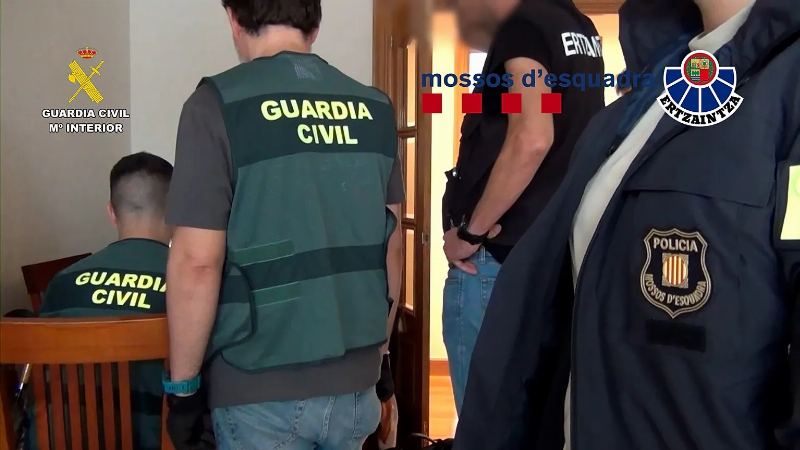
A joint operation by the Civil Guard, Erchaintzi, and the Mossos d'Esquadra police led to the arrest of a 17-year-old boy in Gipuzkoa, Spain, who is considered a key figure in the "764" network. This group has reportedly caused public concern for several months by threatening educational institutions and other entities.
From January to April, he allegedly sent numerous messages announcing shootings and armed attacks. Although none were carried out, many institutions implemented heightened security protocols.
In some messages, he claimed he would livestream the attacks for other members of the organization to watch. Threats against a well-known entertainment center and several individuals are also under investigation.
Searches were conducted on July 16 at two homes linked to the suspect, resulting in the seizure of electronic devices and documents, which are currently being analyzed. The arrested individual has been placed in a specialized facility under the supervision of the Juvenile Court.
Read this article in full and everything else in Telegram, ad-free
Open in TelegramThanks, I just want to finish reading here
What is the "764" Network?
The "764" network originated in the USA and is linked to crimes such as sextortion and the distribution of child sexual exploitation materials. In Spain, the investigation revealed the use of tactics typical of such groups, including swatting and doxxing, aimed at falsely accusing outsiders and provoking police intervention.
The investigation also showed that the arrested individual participated in digital spaces where psychological manipulation of minors and vulnerable youths occurred, leading to humiliation and coercion. The resulting images and videos were then circulated within the community as a means of control.
Prevention as a Key Defense
Investigators emphasize that networks like "764" actively seek out children and teenagers on social media, messaging apps, and gaming platforms. Initial contact is often framed as friendly communication or shared interests, which can escalate into manipulation and isolation of the victim.
For this reason, authorities recommend that families and educators remain vigilant and pay attention to signals such as requests for personal photos, conversations that the teenager is hiding, or suggestions to harm themselves.
Early dialogue with family, educational institutions, or law enforcement remains, according to investigators, the most effective way to prevent a teenager from falling into the traps of such networks.