How Medical Technologies Transform Healthcare: From Idea to Patient
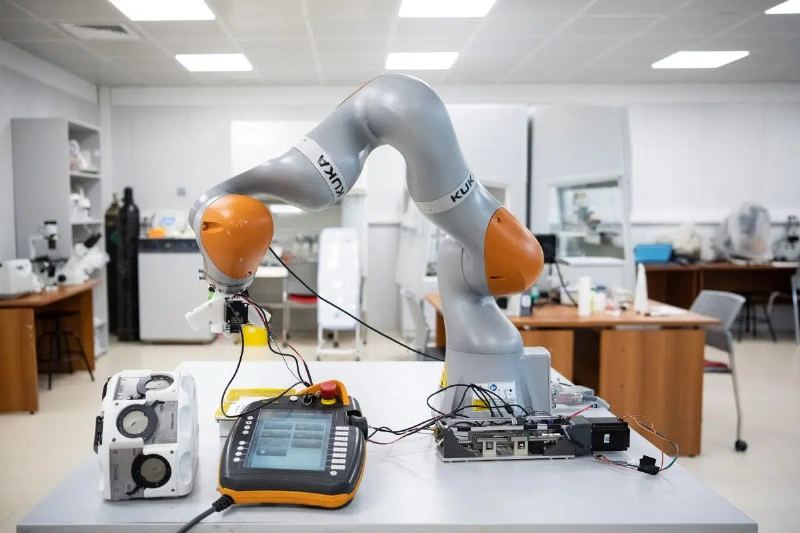
October 30 marks Mechanical Engineer Day. These specialists design, create, and test various devices. In medicine, engineers develop equipment and prosthetics, but the journey from laboratory prototype to clinical application is more complex than it seems. Vladislav Lvov, a candidate of physical and mathematical sciences and associate professor at the Institute of Biomedical Engineering at MISIS University, discusses how engineering solutions are changing healthcare in Russia.
Medical technologies are often perceived as secondary to treatment: the doctor determines what the patient needs, and then engineers create the necessary tool. In practice, these processes are interconnected. Sometimes, an engineering solution enables a treatment method that was previously impossible or makes an existing procedure safer and more accessible.
For example, when developing an implant, it is important to consider not only its shape but also its interaction with the body's tissues. The prosthetic must match human anatomy and assist in performing necessary movements. A diagnostic device must provide reproducible measurements and allow the doctor to work quickly.
Biomedical engineering combines materials science, mechanics, electronics, programming, design, biology, and medicine. This interdisciplinary approach helps create new competitive technologies that meet quality and safety standards.
Read this article in full and everything else in Telegram, ad-free
Open in TelegramThanks, I just want to finish reading here
One of the main misconceptions about innovations in medicine is the belief that a working prototype already means a ready technology. In reality, the transition between these two stages can take many years.
Suppose researchers have created a new material for an implant. First, they may test its strength, load resistance, and surface properties. Then, it is necessary to assess the material's interaction with the biological environment and study potential risks. If it is a medical device intended for human use, it must meet testing requirements, confirm safety and efficacy, and undergo registration. The same applies to software and hardware systems.
An algorithm may demonstrate high accuracy under controlled conditions, such as analyzing a test sample of X-ray images. However, additional factors arise during operation: the quality of input data, maintenance features, personnel qualifications, etc.
Additive technologies allow for the creation of volumetric structures using biological materials. Researchers can form tissue-engineered constructs and develop models for drug testing. However, creating a volumetric structure from cells and biomaterials does not necessarily mean obtaining functional tissue.
The development of this direction requires not only new engineering solutions but also common approaches to describing technologies. In March 2026, Russia approved the first GOST in the field of 3D bioprinting of tissue and organ equivalents. The document establishes basic principles and terminology for the field.
The full cycle of medical device development begins with defining the task. It is necessary to identify the need, formulate requirements, select materials and manufacturing technology, create a model and prototype, and then check whether the result meets the initial conditions. However, the work does not end there. For the development to reach a medical institution, reproducibility, quality control, and registration of the product must be considered.
Medical technologies evolve at the intersection of fundamental science and engineering practice. However, the ultimate goal of this work is not to create innovations for their own sake, but to solve specific patient problems. Therefore, the prospects of development are determined by how reliably and effectively it works in real conditions.