How Jetlag Affects Albatross Navigation During Long Flights
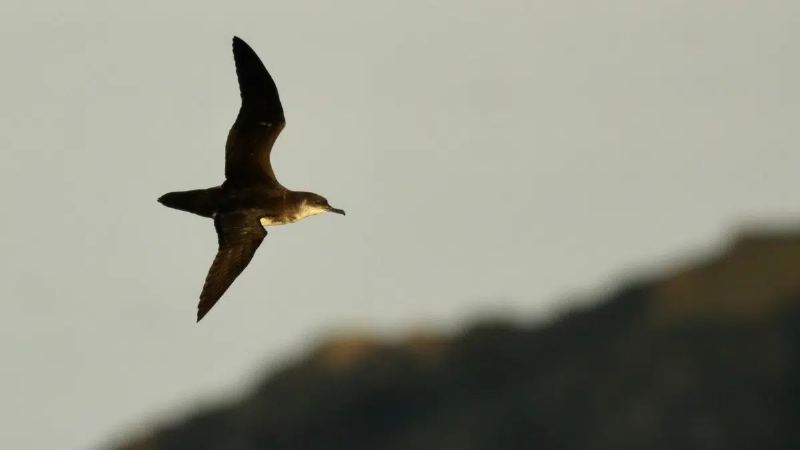
Many birds navigate using the Sun, relying on their internal biological clocks to account for the time of day. Researchers found that during rapid flights, these clocks can lag behind local time, causing birds to slightly veer off course.
While many animals use the Sun as a compass, its position in the sky changes throughout the day. Therefore, simply observing the Sun is not enough. Internal biological clocks allow animals to make this adjustment and maintain the correct course despite the Sun's movement.
When moving quickly along parallels, an additional challenge arises. The bird finds itself at a different longitude, where local solar time differs from the time at the starting point of the flight.
If the internal clocks fail to adjust, the Sun's position may indicate the wrong direction, similar to human jetlag.
Read this article in full and everything else in Telegram, ad-free
Open in TelegramThanks, I just want to finish reading here
The connection between internal clocks and bird orientation has been studied since the mid-20th century. In experiments by German ornithologist Gustav Kramer, starlings changed their chosen direction when mirrors shifted the apparent position of the Sun. Subsequent experiments with artificial day and night cycles showed that if the internal clocks of birds are shifted, they begin to misjudge direction based on the Sun.
An international team of researchers studied common albatrosses. During breeding, they regularly forage in the North Atlantic, sometimes traveling about a thousand kilometers west. The results were published in the journal Chronobiology.
The authors examined nearly 3,700 journeys of 1,045 albatrosses tracked by GPS over 20 years. It was found that during rapid flights eastward, the internal clocks of the birds could lag behind local time by about an hour, leading to incorrect navigation based on the Sun.
To test their explanation, researchers calculated the direction in which birds should deviate due to time differences. Actual routes matched these predictions, and the time difference explained the errors.
Such errors persisted even near visible coastlines: birds continued to navigate by the Sun, even when they could use land outlines. However, this did not prevent them from returning home. Albatrosses adjusted their course along the way, so deviations only slightly lengthened their journey.
Biologists wondered whether such jetlag in birds affects their sleep, health, or survival. Further research is needed to clarify this.