Ancient Mummy Medicine Shows Promise Against Flu Viruses
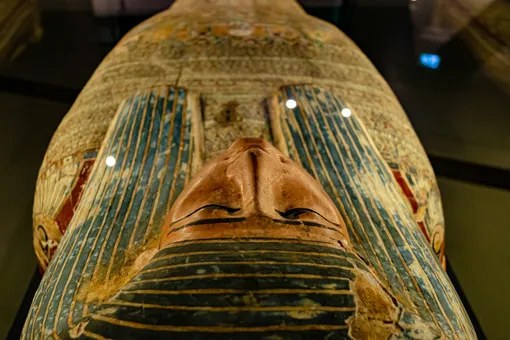
In the Middle Ages, European doctors used remedies made from Egyptian mummies. Recently, researchers studied the composition of this unusual remedy and found that its extract may help cells resist certain flu viruses.
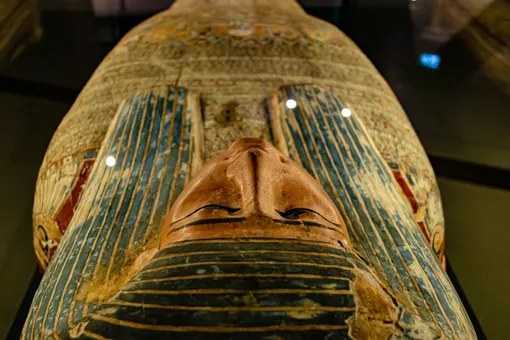
Mummies were considered a universal medicine. The remedy known as Mumia vera aegyptiaca was made from ancient embalmed bodies and was used to treat various ailments.
The trade in mummies became so profitable that Egypt banned their export in the 16th century. However, demand remained high, leading unscrupulous traders to sell dried bodies of more recently deceased individuals as mummies.
Read this article in full and everything else in Telegram, ad-free
Open in TelegramThanks, I just want to finish reading here
Researchers examined 24 samples of mummies to uncover their composition. The analysis revealed components not previously found in embalming recipes, including substances related to aloe.
Another common component was 7-oxodehydroabietic acid, which is found in the resins of coniferous trees, such as pine. This was previously thought to be a potential source of the medicinal properties of mummy remedies.
Researchers tested the extract of Mumia vera aegyptiaca on dog kidney cells infected with four strains of the flu virus. Cells treated with the ancient remedy survived longer than untreated cells, particularly against the H1N1 and H3N2 strains.
This study, published in the Proceedings of the National Academy of Sciences, does not prove that medieval doctors could actually cure patients using mummies. The researchers tested the extract on cells and only against flu viruses. There is still a long way to go before a medicine for humans is developed, but the ancient remedy, once considered mere superstition, has shown unexpected biological effects.