Martian Dust: A New Threat to Future Astronaut Missions
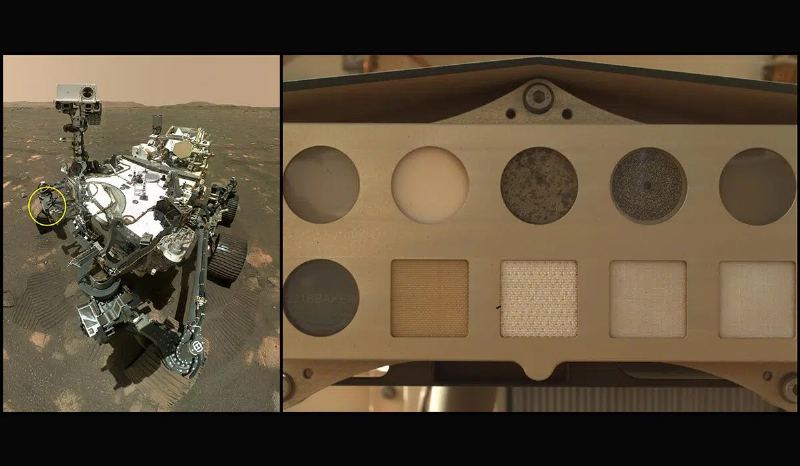
The Perseverance rover has discovered that Martian dust poses a greater threat to future missions than previously thought. It can infiltrate living modules, disable equipment, and even endanger astronauts' health.
The dust covers nearly the entire surface of the planet and is formed by the erosion of rocks. It is carried by the wind and lifted into the atmosphere during dust storms. On Mars, dust becomes a problem even for machines operating without human intervention, settling on solar panels and sensors.
Perseverance has been operating in Jezero Crater since 2021, studying ancient rocks and collecting samples for potential return to Earth. It is equipped with the PIXL X-ray instrument, which determines the chemical composition of materials.
Read this article in full and everything else in Telegram, ad-free
Open in TelegramThanks, I just want to finish reading here
A research team led by Scott VanBommel analyzed how Martian dust accumulated on these surfaces. They found that the dust contains silicon, iron, and sulfur compounds, and is enriched with phosphorus. The smallest particles can adhere to surfaces due to electric charges.
This poses two threats for future astronauts: dust from their suits can enter living quarters upon return, and particles of this size can bypass natural respiratory barriers. If inhaled, they could harm the body similarly to how fine particles on Earth do, increasing the risk of hypertension, blood clots, strokes, and heart attacks.
While researchers did not measure the effects of Martian dust on humans, they suggested studying the toxicity of fine particles and developing effective cleaning methods for suits and air filtration systems. The findings were published in the journal PNAS.