Archaeologists Discover 3600-Year-Old Warrior's Tomb with Rare Stone Mace in Azerbaijan
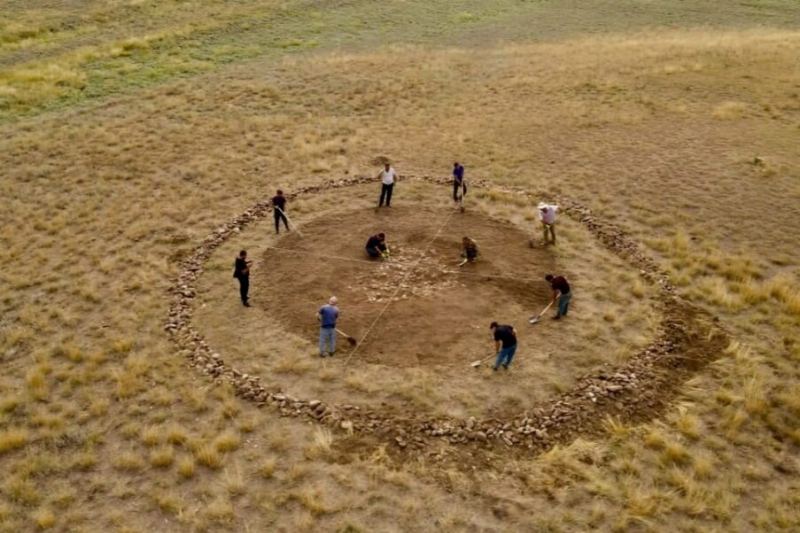
In western Azerbaijan, archaeologists have uncovered a 3600-year-old burial site belonging to a high-ranking warrior of the Bronze Age, as indicated by the weapons found, including a bronze dagger, dozens of arrowheads, and a rare stone mace made of diorite.
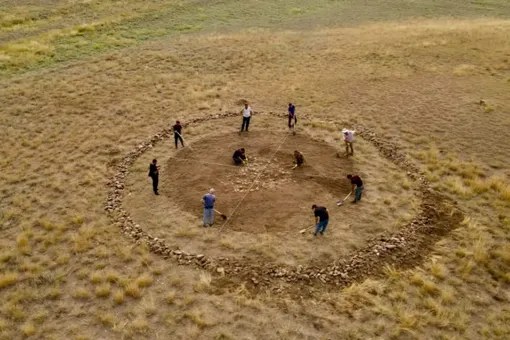
The burial was discovered in mound No. 4 at the Keshikchidagh State Historical and Cultural Reserve. It dates back to the Middle Bronze Age of the South Caucasus, approximately to the 17th-16th centuries BC.
The mound is made of stones, has a diameter of about 12 meters, and rises about 80 centimeters above the ground. The burial chamber is located at a depth of 1-1.2 meters. The excavation is led by archaeologist Vagif Asadov from the Institute of Archaeology and Anthropology of the National Academy of Sciences of Azerbaijan.
Read this article in full and everything else in Telegram, ad-free
Open in TelegramThanks, I just want to finish reading here
The unique aspect of this find is the burial inventory. The bronze dagger indicates the military status of the individual and suggests that he held a significant position in society.
Mace Weighing Half a Kilogram
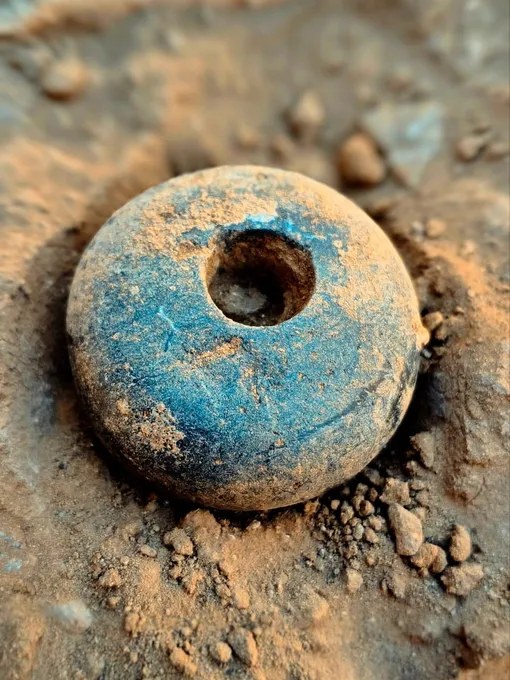
The mace head made of diorite weighs about 400-500 grams and features a polished symmetrical shape with a through hole likely for a handle made of wood or bone. In the Bronze Age, such items could serve as symbols of power.
Arrowheads were also found, including rare winged forms typical of the Middle Bronze Age. Two arrowheads are made of black obsidian, indicating the use of local sources of this volcanic glass. Nine others are made of flint.
Laboratory Research
Currently, specialists are conducting initial restoration and laboratory analysis of the finds, including ceramics. After documentation, the items will be added to the reserve's collection.
Archaeologists also aim to determine the age of the burial using radiocarbon analysis, with samples planned to be sent to laboratories at the University of Tokyo, Turkey's TİKA, and Woods Laboratories at the University of Miami.